
Oil at $6 a Gallon? Why West Chester Homeowners Are Switching From Oil to a Heat Pump
 Eric Light October 24, 2026 11 min read
Pennsylvania heating oil averaged $6.07 a gallon on October 19, 2026, according to the U.S. Energy Information Administration. At that price, a 200-gallon delivery costs about $1,200, and a house that burns 700 gallons a winter needs three or four of them.
If your oil furnace is getting older, that bill is a good reason to look at switching from oil to a heat pump. A single heat pump heats your home in winter and cools it in summer, so one machine does the work of a furnace and an air conditioner. It can also cost less to run than oil at today's prices, because it moves heat instead of burning fuel to make it.
Takes oil deliveries off your calendar, along with the worry of a tank running low.
Whether it pays off in your home comes down to the equipment, the ductwork, the insulation, and a plan for the coldest week of winter.
How Does a Heat Pump Heat a House Without Burning Fuel?
A heat pump moves heat instead of making it. An oil furnace burns fuel to create heat, while a heat pump uses electricity to pull heat out of the outdoor air and carry it inside. Even on a 20-degree January morning, outdoor air still holds heat the system can capture.
How a Heat Pump Heats Your Home in Winter
Refrigerant carries the heat between an outdoor unit and an indoor coil, in four steps:
- The outdoor coil soaks up heat from the outside air, even when that air feels cold to you.
- The compressor squeezes the refrigerant, which pushes its temperature well above room temperature.
- The indoor coil releases that heat into the air moving through your system.
- A blower sends the warm air through your ducts, or wall-mounted ductless heads deliver it straight to each room.
How the Same Heat Pump Cools Your Home in Summer
In summer, the system runs in reverse and pulls heat out of the house, so it doubles as your air conditioner. Moving heat takes far less electricity than making it with electric resistance heat, and that efficiency is what makes a heat pump a strong alternative when oil gets this expensive.
Why Do Heat Pumps Suit Homes in Chester County, the Main Line, and Delaware County?
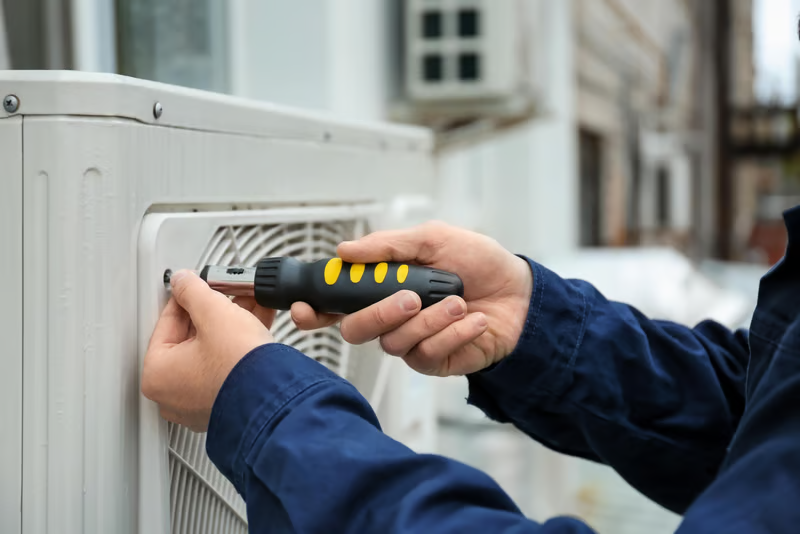
Our weather asks for both heating and cooling, sometimes in the same month. We swing from single digits in January to the upper 90s in July, so one system that covers both seasons earns its keep all year. The case is strongest when your oil furnace and your central air conditioner are both nearing replacement, because one heat pump then replaces two machines.
Homes here need different answers, and some use both kinds of systems.
Central Heat Pumps for Homes With Sound Ductwork
A house with ducts in good shape may be a good fit for a central heat pump installation. The heat pump uses the ducts you already have, so most of the work happens at the equipment, not inside your walls.
Ductless Mini-Splits for Homes Without Ducts
Ductless mini-splits suit the homes that central systems struggle with. Each indoor head heats and cools its own room, with its own control, so no ducts are needed:
- Older borough twins that were never built with ductwork, where running new ducts would mean opening plaster walls and ceilings
- Additions that sit off the original duct plan, so the main system never reaches them properly
- The bedroom over the garage that never stays comfortable, because it sits over an unheated space at the far end of the duct run
Why Every Heat Pump Choice Starts With a Load Calculation
A room-by-room HVAC load calculation sizes the system for your house, not its square footage, because square footage misses details like these:
- Older single-pane windows lose far more heat than newer double-pane glass.
- Thin attic insulation lets the heat you pay for escape overhead.
- Drafty doors and windows pull cold air in all winter.
- Rooms that take the afternoon sun need more cooling in July than the rest of the house.
Get the size wrong and you pay for it. Too small, and it runs nonstop on the coldest nights. Too big, and it switches on and off in short bursts that waste energy and leave rooms clammy in summer.
Can a Heat Pump Replace Oil Heat Through a Pennsylvania Winter?
Yes, and far better than the heat pumps of twenty years ago. A modern cold-climate model is built to keep heat coming when the outdoor temperature drops.
What Makes a Cold-Climate Heat Pump Different
- A variable-speed compressor runs low and steady on mild days, which keeps rooms even and uses less electricity than running at full blast.
- When the temperature drops, it ramps up instead of shutting off and starting over, so the house doesn't swing between too warm and too cool.
- Smarter controls manage output and defrost cycles, so the system keeps heating at much lower outdoor temperatures than older models could.
What the ENERGY STAR 5°F Test Means for Your Home
ENERGY STAR cold-climate heat pumps are tested at 5°F and must still deliver at least 70 percent of their rated heating capacity there. In plain terms, a unit that puts out 36,000 BTUs of heat on a 47-degree day still puts out at least 25,200 BTUs at 5°F.
Many keep running below that. Running is not the same as heating your whole house, though, so the unit has to be sized for your home's heating load, with a plan for the coldest nights.
Output falls as the temperature does, and knowing the temperature at which a heat pump becomes less effective tells you how much your house will lean on backup heat.
How Much Could a Heat Pump Save When Oil Costs $6 a Gallon?
High oil prices make the case stronger, and the math is worth doing with your own numbers. A home that burns 700 gallons a year spends $4,200 on oil at $6 a gallon, before tank service or delivery charges.
The Four Numbers That Decide Your Heat Pump Savings
A heat pump can bring that bill down. How far it comes down depends on four numbers from your house:
| Number | Where to find it | Why it matters |
|---|---|---|
| Electric rate per kWh | Your electric bill | Sets what each hour of heat pump heating costs |
| Gallons burned, last two winters | Your delivery tickets | Shows how much heat your house uses |
| Furnace efficiency | Your last tune-up report | An older furnace sends more of each gallon up the chimney |
| Heat pump rating (HSPF2) | The installation quote | Shows how much heat you get per unit of electricity |
Put those together and you can compare what a unit of heat costs from each fuel, the same way you'd compare price per ounce at the grocery store.
How Backup Electric Heat Affects Your Savings
Backup electric heat belongs in that math too. Most ducted heat pumps carry electric heat strips for the coldest hours, and they heat the way a space heater does, at a much higher running cost than the heat pump itself.
Strips that switch on every cold night can eat into the savings, which is why the difference between auxiliary and emergency heat matters before you pick a system.
What a Heat Pump Installation Quote Should Show
Installation is the other half of the decision. A useful installation quote puts these side by side, so you can check the math yourself:
- The upfront installation price, including any ductwork or electrical work the job needs
- The estimated yearly heating cost, based on your house and not a national average
- Every assumption behind both numbers, written down, so you can compare one quote against another fairly
If a quote shows only the equipment price, ask what it leaves out.
Can the Ducts From an Oil Furnace Carry a Heat Pump's Airflow?
Sometimes, and it is worth checking before anyone quotes you equipment. A heat pump usually sends out air at a lower temperature than an oil furnace does, so it has to move more air to deliver the same comfort. Ducts that were fine for oil can come up short.
Duct Problems That Hold a Heat Pump Back
- Undersized ducts can't move the extra air, so rooms fall short and the system gets noisy.
- Too few returns starve the system of air and push up your bills.
- Leaky ducts lose heated air into attics and crawlspaces before it reaches a room.
Some homes need modest fixes. Others need new or rebuilt ductwork, which changes the project price, and you should know that before you sign anything.
What a Heat Pump Ductwork Evaluation Should Measure
A technician starts with static pressure, which works like a blood pressure reading for your duct system. High pressure means the system is straining to push air through. From there, the evaluation covers:
- Duct capacity, to confirm the ducts can carry the extra air a heat pump moves
- Return-air paths, since a heat pump needs air coming back as freely as it goes out
- Leakage, because air lost in the attic or basement is heat you paid for and never felt
- Airflow to each room, to find the rooms that are already short before new equipment goes in
Where changing the ducts would mean opening finished ceilings, ductless heads are often the easier route. As we tell every homeowner, the quality of the install dictates the outcome more than the brand.
What Changes When You Switch From Oil Heat to a Heat Pump?
You stop watching the tank gauge, and you can make the switch all at once or one step at a time.
No More Oil Deliveries or Empty Tanks
Switching fully to electric heat means:
- No deliveries to schedule, and no delivery charges on top of the oil
- No tank running dry during a cold snap, and no service call to restart a furnace that ran out of fuel
- No waiting on a truck when half the county is calling at once during the first deep freeze
- No oil tank to inspect, maintain, or eventually replace
Penguins handle a cold snap just fine. A house with an empty oil tank does not, and a heat pump takes that risk off the table. A heat pump still needs electricity, the same as the burner and blower on most oil furnaces. What goes away is the second dependency on stored fuel.
Dual-Fuel Heat Pumps for a Gradual Switch
If you'd rather move gradually, a dual-fuel heating system pairs a heat pump with your existing oil furnace on one thermostat. The heat pump carries most of the season, and the furnace takes over on the coldest days or when oil is the cheaper fuel to burn.
Your installer sets the outdoor temperature where the thermostat switches from one to the other, based on your house and what oil and electricity cost. You burn less oil and keep the system you already know as backup.
Keeping oil, adding a heat pump, going dual-fuel, and replacing oil entirely are the four options for a home with oil heat, and the right one depends on the age of your furnace and the shape of your ducts.
Why Work With Precision Air Heating and Cooling on Your Move Away From Oil?

Precision Air Heating and Cooling has worked out of West Chester since 1993, 33 years this year. Our crews serve Chester County, the Main Line, and neighboring Delaware County, and we are independent and locally owned, so the people signing off on your quote are your neighbors. Anything we put on your quote is something we'd install in our own homes.
What Our Heat Pump Estimate Looks At
Moving off oil starts with a look at the whole house:
- The heating and cooling equipment you have now, including its age and repair history
- The ductwork and return air, measured rather than eyeballed
- The insulation and air leaks that decide how much heat the house needs
- The electrical panel, to confirm it has room for a heat pump and its backup heat
- Your last two winters of oil delivery tickets, so the savings estimate starts from what you burned, not a guess
With the right equipment, enough airflow, and a clear cost comparison, a heat pump is a practical investment in year-round comfort and a way to stop bracing for the next oil bill.
Thinking about a new system but don't want to pay just to hear the number? The in-home estimate for a replacement is free, and you'll see the equipment options, the ductwork needed, and the estimated yearly heating cost side by side before you owe us a cent. Financing is available for qualified customers, subject to approval. Terms may vary.
Call (484) 690-4328 and the Penguin Patrol will come take a look before the next delivery truck does.
Owner & President of Precision Air Heating & Cooling, the independent, family-owned company that has served West Chester and Chester County homes since 1993.