
Air Conditioning, Heating, Heat Pumps, Zoning, and Cleaner Air in Exton, PA
Serving Exton, Eagleview, Marchwood, Whiteland Woods, Exton Station, Whitford, and Nearby Areas


Penguins handle cold. We handle both ends of it.
Why Exton Houses Run Warm Upstairs and Cold in the Back Bedroom
Most of Exton went up in waves after the crossroads got busy, so the housing here is newer than almost anywhere else in the county. Newer does not mean trouble-free. It means the fault is usually in the design rather than the wear. One system for three floors, a duct run put where the framer had room, and a condenser sized off a table instead of the house. After 33 years working these streets, we can usually name the weak room before we walk it. Our Exton HVAC technicians explain the problem clearly, show you what went wrong and provide written, transparent pricing before working on your system.
What We Fix and Install Around the Exton Crossroads
 Cooling · Exton, PA
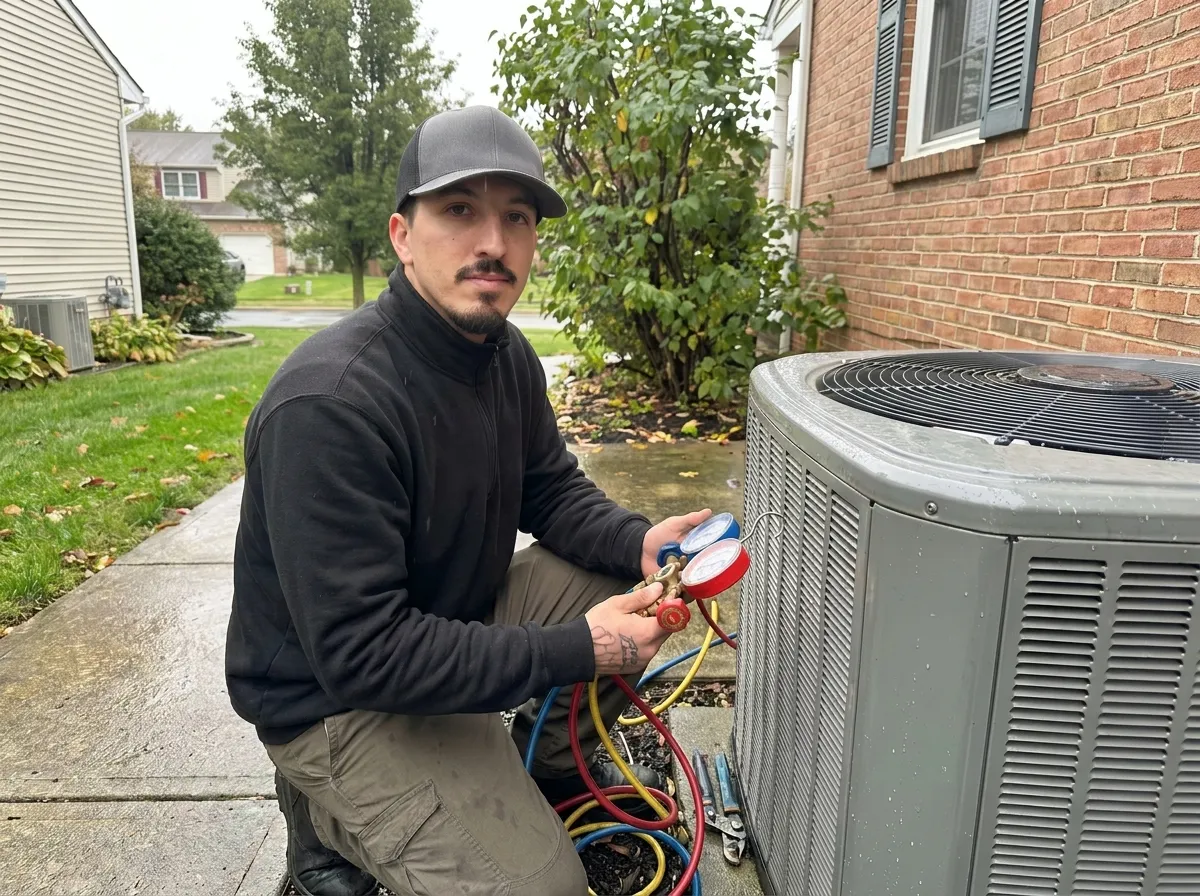
Air Conditioning Services
Cooling an Exton house is a distribution problem more often than a capacity problem. We run a load calculation on the house as it stands, then look at whether the trunk and returns can carry what the equipment makes, because an oversized condenser in a three-story townhome short-cycles, leaves the humidity behind, and still forgets to cool the top floor. Where the ducts cannot be fixed, zoning or a ductless head does the job the original design never managed.
 Heating · Exton, PA
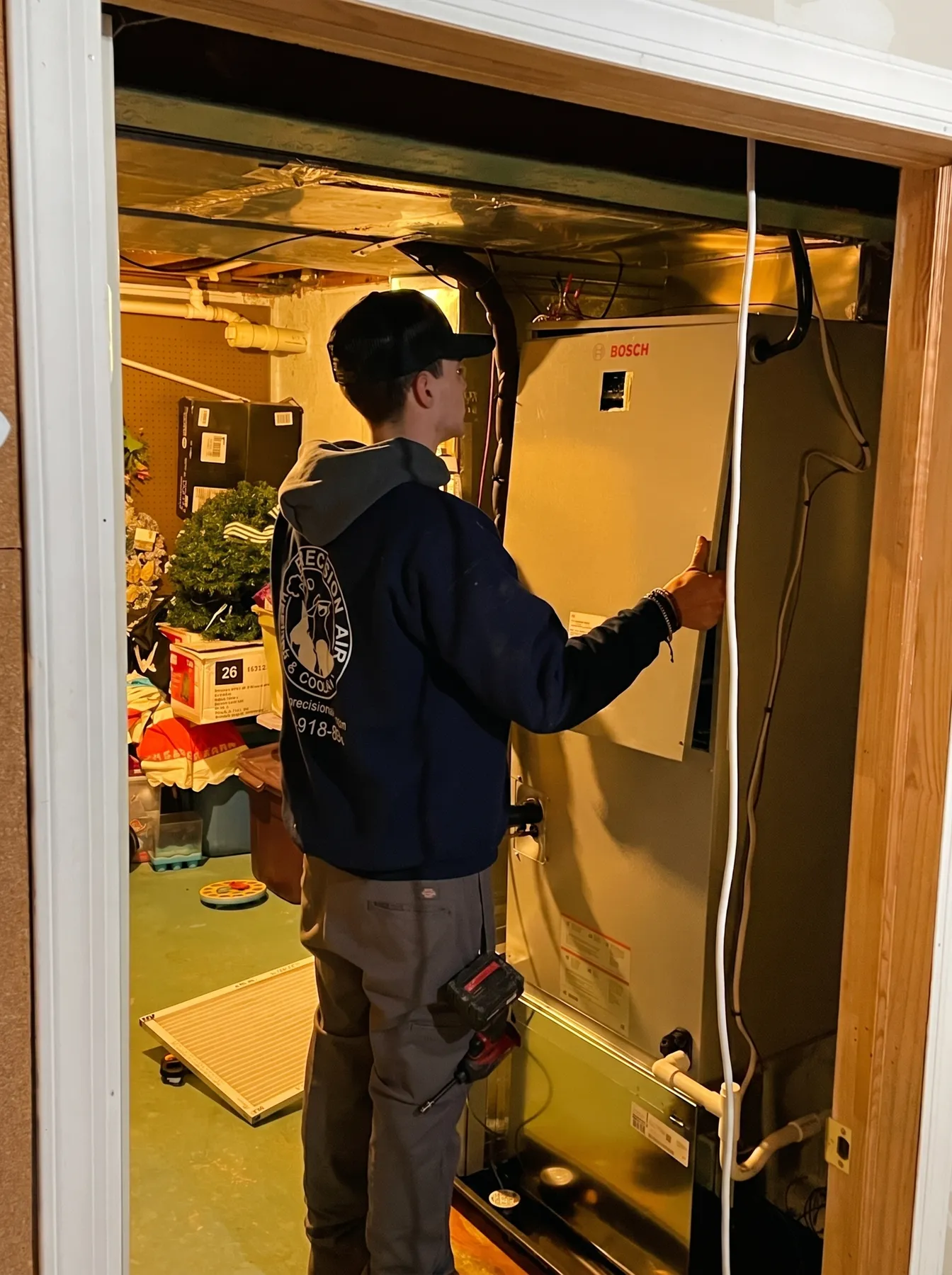
Heating Services
A 1980s development furnace is now on its second or third owner. A lot of Exton basements are running equipment the builder installed, and nobody has questioned it since. We read the combustion numbers, test the heat exchanger, and tell you which system has another winter left to run. Plenty of homeowners here are weighing a heat pump, so we put the fuel math beside the equipment math rather than after it.
 Air Quality · Exton, PA
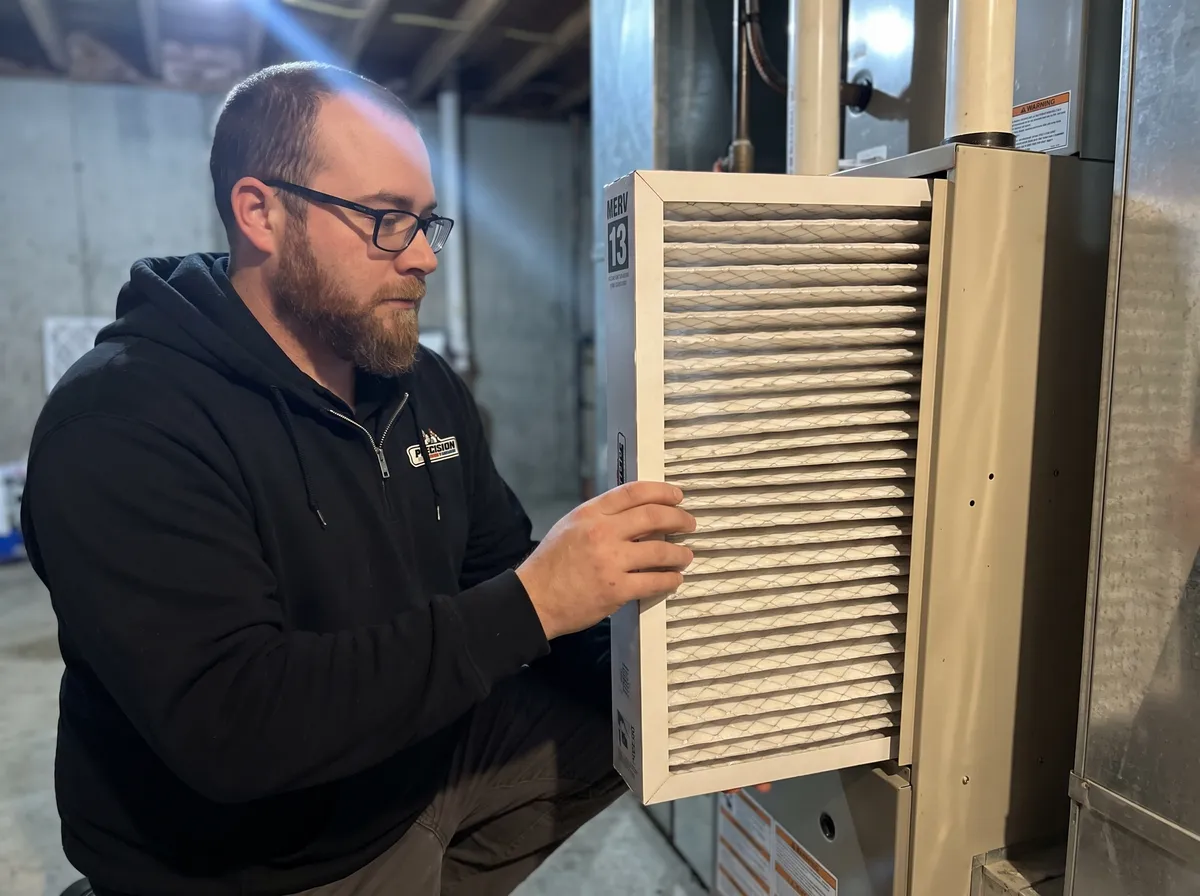
Indoor Air Quality Services
A house built after 1975 is sealed far tighter than a borough twin, which is good for the bill and hard on the air. Nothing leaves on its own, so cooking, pets, and whatever the pollen season brings in through the Route 30 corridor from March into October all stay put. The fix is a sealed return, a filter cabinet deep enough for a 4-inch MERV-13, and ventilation that brings something new in on purpose instead of leaving the house to recirculate February all the way to March.
 Water Heaters · Exton, PA
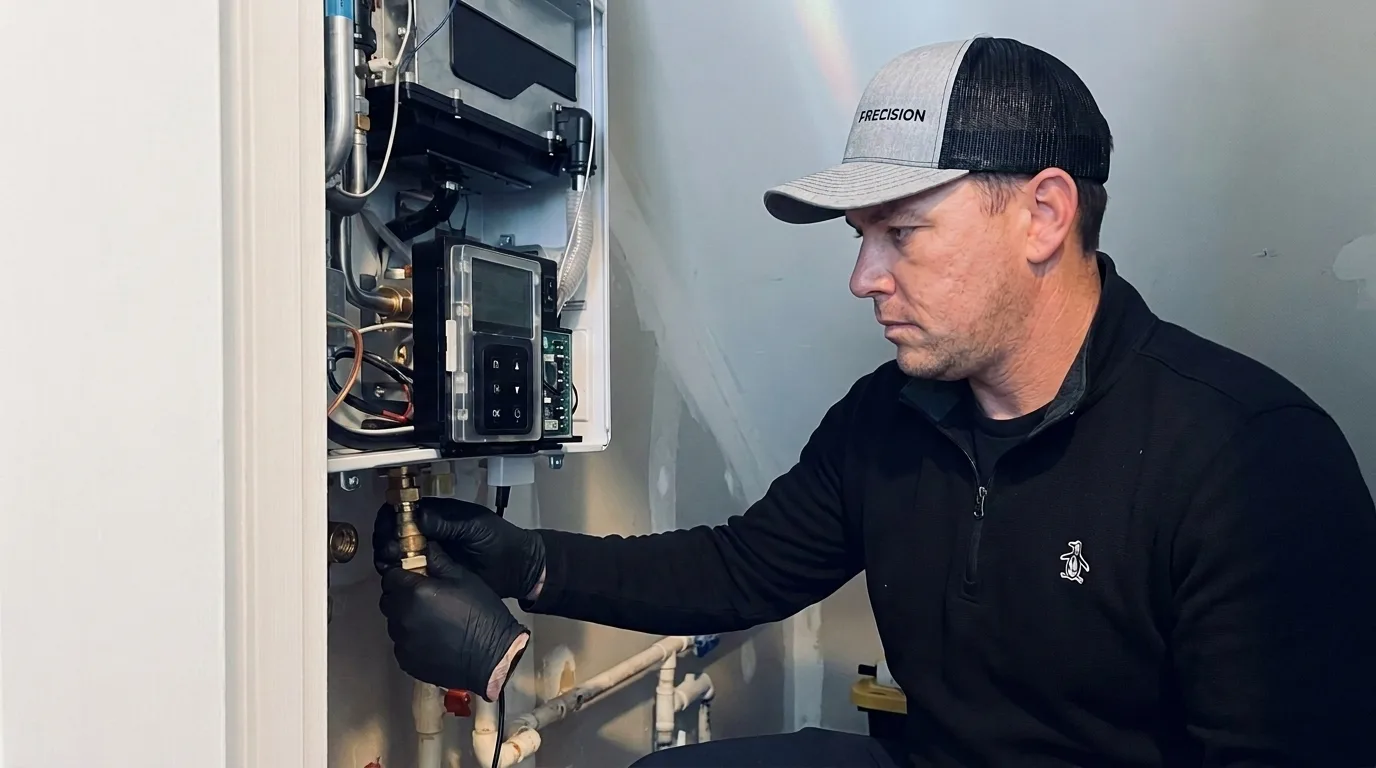
Water Heater Services
Development houses got the tank that fit the builder’s budget, which is why so many Exton utility closets hold a 40-gallon unit serving a house with three full bathrooms. We size the replacement to how your household showers rather than to what came out, and we say plainly when a tankless unit will not work because the gas line feeding it cannot carry the load.
An Exton HVAC Company With No Sales Quota Behind the Advice
We size the system to your house, not to the builder’s spec sheet
The number on the old nameplate tells you what a developer ordered in 1986 for a floor plan. Not what your house needs now that it has a finished basement and new windows. We measure the load on the home in front of us and quote from that.
We will tell you the answer is zoning before we sell you a bigger unit
A hot third floor and a cold back bedroom are a distribution fault. Selling you more tonnage makes the humidity worse and leaves the same rooms uncomfortable. We would rather fix the ducts, add a zone, or put a head in the one room that never worked.
One price, in writing, before anything starts
You approve a flat rate before a tool comes off the truck. Nothing is billed by the hour, and nothing gets added later because it turned up once the panel was open.
The parts these neighborhoods go through ride on the truck
Our trucks carry the components that fail most in houses of this age, so a large share of Exton calls finish on the first visit rather than turning into a second appointment and a week without cooling.
We price the repair against the replacement and let you choose
When a system is old enough that the question is open, you get both numbers side by side and the reasoning behind each. If the repair is the better spend, we will argue for it, even though the replacement pays us more.
Independently owned in Chester County since 1993
No investor board, no quota handed to the technician standing in your utility room. The people who decide how this company behaves live in this county and answer for it at the hardware store.

Request your free estimate
Tell us what’s going on. A real person follows up, usually the same business day.
* indicates required fields
Book an Exton Visit Without Working Through a Phone Menu
What Happens in the First Two Minutes
Someone in our West Chester office picks up, asks what the system is doing, and puts you on the board. No menu, no hold queue, no ticket number. When a dead furnace in a cold snap or AC during a heat alert can not wait, you move up the list, and we give you a time we can actually show up on rather than one that sounds good.
After hours, the call still gets somewhere
The answering service takes the details and dispatch rings you back within minutes. Press one, and it rings the whole crew, so nothing waits on a voicemail box until morning.If typing suits you better
The online form works at any hour, and we confirm it or send a text if that is easier. Either way, a person handles it from there.

“When you call, you get a person who actually helps.”
Eric Light · Owner & President
What Exton Homeowners Tell Us After the Work Is Done
The line that matters in a review is rarely about the repair. It is about whether the price they were quoted is the price they paid.
4.9 stars from 900+ Google reviews·Read all reviews
Exton Landmarks Our Trucks Pass on the Way to Your Door
Exton is a crossroads with a county park at one end and a town center at the other, and our trucks cross most of it in a normal week. We sit in the same Route 30 backup, take the same shortcut around the Route 100 light, and know which developments have the driveway you cannot turn a van around in.
Nineteen developed acres of fields and woodland, and the only county-owned trailhead on the Chester Valley Trail. We are down Church Farm Lane often enough to know when the lot fills.
132 Church Farm LnThe rail trail’s western end is here in Exton, running roughly nineteen miles east toward Norristown on the old Chester Valley Railroad bed. A good share of this ZIP code plans its weekends around it.
132 Church Farm Lane, ExtonThe walkable heart of an 800-acre planned community, with a Thursday afternoon farmers market in the Tree Grove and free concerts through the summer. Plenty of the townhomes we service are a short walk from it.
565 Wellington SquareA nineteenth-century stone church on the old Lincoln Highway, and a reminder that there was an Exton here long before the bypass and the mall.
1105 E Lincoln Hwy, Exton Exton, PA
How Long It Takes Us to Reach an Exton Driveway
Carter Drive to the crossroads is a straight run up Route 100. No dispatch hub, no routing queue, and no truck coming down from another county because the local one is full.
Tell us which room feels wrong and what the unit is doing, and you will have a likely cause before the visit is even on the calendar.
Dispatch rings back within minutes, so you know before bed whether a technician is coming or whether it holds until morning.
Ship Road, Pottstown Pike, the Whitford crossing, and which Eagleview blocks have the narrow rear drives.
The people fixing systems are not the people installing them, so a heat alert does not push your repair into next week.
- Precision Air Heating and Cooling208 Carter Dr, Ste 3, West Chester, PA 19382
- Your Exton homeZIP 19341 and the developments around the crossroads
Where the Penguin Patrol Turns Off Route 100
Our shop is in West Chester and Exton is a short run north, so the crossroads and the developments around it get the same trucks and the same standard as our home ZIP code. If you are not certain your address falls inside our range, call, and we will give you a yes or a no.
Exton Areas and ZIP Codes We Serve
Nearby Towns We Also Cover

Exton HVAC Pricing, From the Diagnostic Fee to the Financing
$99 for Comfort Club members or if you can wait for the next available appointment, $139 daytime without a membership, $169 after hours for members and $229 after hours without one. After hours means after 4 p.m. and weekends. You hear the number when you book, and it comes off the repair.
The number is agreed and signed off in advance, so nothing about the bill is left to the end of the job.
Wells Fargo, 12 to 18 months, with longer terms up to ten years for qualified customers.
A seasonal care plan from $10 a month for cooling only, or $18.33 a month across both seasons. Members pay the lowest diagnostic rate and move up the list when the weather turns.
Replacement quotes work on a different footing. Nobody should have to buy a diagnostic just to find out what a new system would cost, so the in-home estimate carries no fee and no obligation attached to it.
Tell Us What the System Is Doing, and We Take It From There
You do not need the right vocabulary to make this call. Describe the noise, the smell, the error code, or which room has gone wrong, and we will ask the questions that narrow it down and book the visit.
Outside office hours, the answering service takes it, and dispatch rings you back within minutes. We answer, day or night, and we tell you which of those two you are getting rather than promising a truck we cannot send.

The person who answers can book you, not just take a message.
Dispatch returns an after-hours call while it is still that night.
Scheduling matches the technician and the stock to what you described.
Our shop is fifteen minutes from the crossroads.

Exton HVAC Questions We Get Asked on the Phone
Still have a question? Call usAre you based near Exton?
What HVAC services do you cover in Exton?
Do I need a permit for HVAC work in Exton, and do you pull it?
My upstairs never cools. Will a bigger air conditioner fix it?
Are there rebates on a new system in Exton?
West Whiteland sits on limestone. Does that change where an outdoor unit goes?
How much is a service call in Exton?


Get a Written Price for Your Exton Home This Week
Thirty-three years in this county. A price you approve before the work. Repairs we argue for when the replacement would pay us more. The schedule fills the week the weather turns, so today’s call is the appointment you want.