
Why Your Chester County Furnace Keeps Tripping the Breaker
 Eric Light October 16, 2026 11 min read
A furnace that keeps tripping the breaker is almost always drawing more current than its circuit allows, most often through a blower motor, a weak capacitor, an inducer motor, or damaged wiring. The timing is the best clue. A trip the moment the furnace starts points at a motor or capacitor, and a random trip points at wiring.
Reset the breaker once. If it trips again, leave it off and have the furnace checked, because every reset after that feeds power into a circuit the breaker has already flagged.
Why Does a Furnace Trip the Breaker in the First Place?
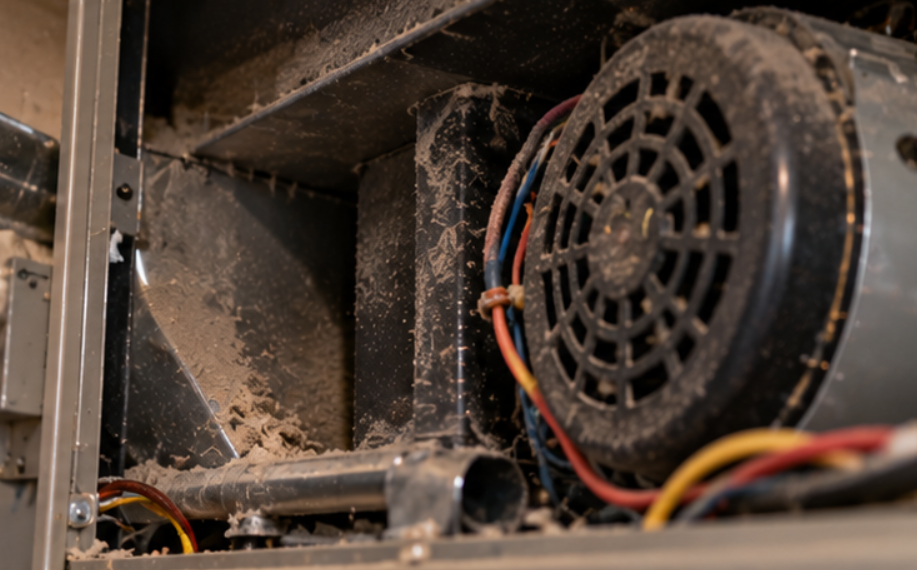
A breaker trips for one of two reasons: an overcurrent, where a circuit draws more amps than it is rated for, or a short, where electricity finds an unintended path and current spikes almost instantly. The breaker senses that and cuts power. It is doing exactly what it was designed to do.
The furnace is the appliance sitting on that circuit, and it draws its current through motors, igniters and controls. When a motor starts to drag or a wire chafes through its insulation, the current climbs past the circuit's limit and the breaker opens. The breaker is not malfunctioning. It is protecting the wiring in your walls from overheating.
Is One Breaker Trip Different From Repeated Trips?
A single trip and a repeating trip are two different situations, and they call for two different responses. A one-time trip can be a fluke: a brief voltage sag, a momentary surge as the blower spun up, or a breaker already near the end of its life.
When the trip happens only once, reset it, watch it, and if the furnace runs normally for the rest of the day, you likely caught a one-off rather than a developing fault.
A pattern is different. If the breaker trips again within minutes, or trips every time the furnace cycles, something on that circuit is consistently pulling too much current or shorting. That is not random and it will not fix itself. A repeat means a physical fault that gets worse the more you run the system.
The distinction matters because it decides your next move. One trip buys you a reset and a watchful eye. A repeat means you stop resetting and start diagnosing.
Which Furnace Part Usually Draws Too Much Power?
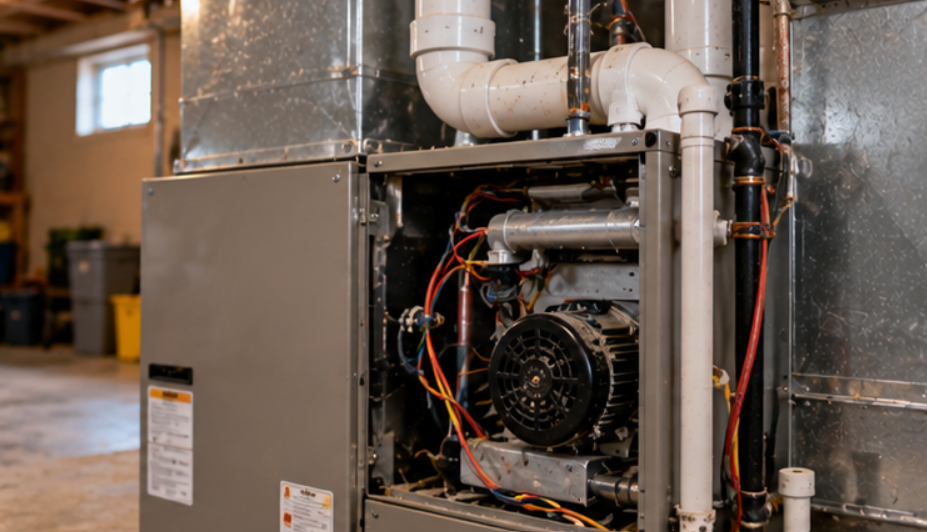
Five components account for most breaker trips, and each overdraws for a different reason: the blower motor, the capacitor, the inducer motor, the wiring feeding the unit, and electric heat on an undersized circuit. Each one pulls too much current under its own conditions, which is what makes the timing of the trip a useful clue.
The Blower Motor
The blower sits inside the furnace cabinet and pushes heated air through your ducts. When its bearings wear or it starts to seize, the motor strains to spin and pulls far more current than normal. That extra draw trips the breaker, often right at startup. A seized blower is one of the more common causes and usually trips the moment the furnace calls for heat.
The Run Capacitor
The capacitor is a small cylinder that stores and releases an electrical charge to help the motor start and keep running. When it weakens, the motor has to work harder to turn, drawing more amps to compensate.
A failing capacitor is cheap and quick to test, which is why a good technician checks it early before condemning the motor itself. Being quoted a motor before the capacitor was tested is worth a second question.
The Inducer Motor
The inducer is a small motor that pulls combustion gases out through the flue before ignition. It runs first in the sequence, so a shorted or failing inducer often trips the breaker seconds after the furnace starts, before the burners ever light. Because it fires early in the cycle, an inducer fault can look like a blower problem until someone watches the sequence closely.
Damaged or Shorted Wiring
Wiring that has chafed, overheated, or been chewed by rodents can create a short, where current jumps its intended path and spikes instantly. A short on the thin thermostat wires usually blows the small fuse on the control board instead, so a random breaker trip points at the line-voltage wiring feeding the furnace.
Wiring faults are not homeowner territory. If the trip is random and the motors test fine, the wiring is the next suspect.
In older homes, check whether the furnace shares its circuit with other loads. The electrical code expects central heating equipment on its own circuit, and a shared one can trip when everything runs at once.
Electric Heat Strips on an Undersized Circuit
A gas furnace typically runs on its own 15 to 20 amp circuit, but an electric furnace, or the backup heat strips in a heat pump's air handler, can need 60 amps or more. If those strips sit on a circuit that was never sized for them, they trip the breaker under full heating load even when nothing is broken.
Pinning down the cause means measuring, not guessing. A seized motor or a weak capacitor should be diagnosed and repaired in West Chester with the amperage draw measured.
Which of these five you are looking at often comes down to when the trip happens in the cycle. A motor that fails at startup points somewhere different than one that trips after twenty minutes of running.
Does the Timing of a Breaker Trip Tell You the Cause?
The moment the breaker trips is one of the most useful clues you can hand a technician. Motors draw several times their running current during the first second of startup, so a trip at ignition points toward a motor or capacitor that cannot handle that surge. A trip several minutes in points somewhere else entirely.
The first sharp cold snap of a West Chester winter often arrives after the furnace has sat idle since spring. A motor or capacitor that quietly degraded over those warm months fails on that first hard startup, which is why so many first-of-season trips happen right at ignition. Note the timing before you call.
| When It Trips | Most Likely Cause | Why the Timing Points There |
|---|---|---|
| Right at startup | Blower or inducer motor, weak capacitor | Startup surge is several times running current, so a struggling motor overdraws first |
| A few minutes in | Blower motor under load, heat strips | Current climbs as the motor heats and strains, or as electric heat engages |
| Random, no pattern | Shorted wiring, loose connection | A short spikes current instantly and intermittently, unrelated to the cycle |
A single observation is not a diagnosis, and timing narrows the field without settling it. Still, telling a technician exactly when the breaker goes saves time and often the cost of chasing the wrong part.
Is It Safe to Keep Resetting a Furnace Breaker?
You can reset the breaker once and watch it, but if it trips again, stop. Each reset re-energizes a circuit the breaker already flagged as faulty, and feeding power into a short is how fires start. The breaker is not the problem to defeat. It is the warning you should heed.
Every winter we see the same mistake: a homeowner resetting the breaker a dozen times on a cold night because the heat has to come on. That habit is dangerous.
Trane is blunt about it, warning homeowners not to keep resetting the furnace breaker.
Use this line to decide when to stop and when to cut power entirely:
- After one trip: Reset the breaker a single time and watch whether the furnace runs normally.
- After a second trip: Stop resetting and leave the breaker off until the fault is found.
- If you smell burning or hot plastic: Shut the breaker off immediately and do not turn it back on.
- If the breaker itself feels hot or looks scorched: Keep it off and have the panel inspected.
- If the trip is random and frequent: Treat it as a possible wiring short and stop running the furnace.
Err toward caution here. A furnace that will not hold power is uncomfortable, but a circuit you keep force-feeding is dangerous.
What Can You Safely Check Before Calling for Furnace Repair?
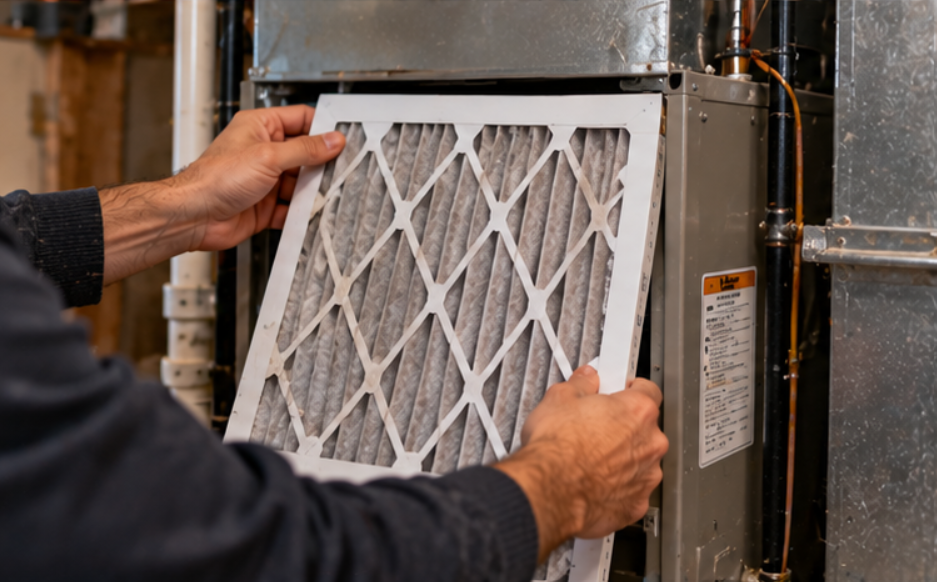
A handful of checks are safe and sometimes solve the problem. They involve no tools, no panel access, and nothing behind a cover. The line is simple: filters, settings, and visible conditions are yours. Motors, capacitors, and wiring are not.
Start with these before you call:
- Check the air filter: A furnace filter should be checked monthly and replaced roughly every 1 to 3 months in heating season.
- Replace a clogged filter: A choked filter starves airflow and makes the blower strain and draw more current.
- Confirm the thermostat setting: The thermostat is the control that calls for heat. Make sure it is set to heat and above room temperature.
- Look at the supply vents: Blocked or closed vents raise system pressure and can make the blower work harder.
- Inspect the breaker visually: A breaker that is warm, discolored or smells of hot plastic needs a professional, not another reset.
A clogged filter is worth ruling out first because it is free to fix and a common cause of extra motor load. That said, a filter rarely explains a hard trip at startup, so do not let a fresh filter talk you out of calling if the breaker keeps going.
The more reliable safeguard is seasonal service. A furnace inspection is the thing that catches a weak motor or a tired capacitor before the first cold snap exposes it.
Where these checks run out is where the trained diagnosis begins. Call when the breaker trips a second time, when the trips are random, or when you notice any burning smell or heat at the panel.
Before you call, note exactly when the breaker trips, whether it is gas or electric heat, whether you smelled anything, and how many times it has happened. That report lets a technician confirm whether the fault is a part or the circuit itself, and it saves you from paying someone to chase the wrong one.
Furnace Tripping the Breaker in Chester County? We Measure the Draw Before We Quote
A breaker that keeps tripping is a measurement problem, not a guessing game. Our technicians put a meter on the blower, the inducer, and the capacitor, find the part that is overdrawing, and show you the reading before anyone quotes a repair. The diagnostic fee is flat and told to you up front, and the repair price comes in writing before work starts.
Precision Air Heating and Cooling has repaired furnaces across West Chester and Chester County since 1993. Call (484) 690-4328 and leave the breaker off until we get there, or book furnace repair online.
If the furnace is old enough that the repair math no longer works, we will price furnace installation and replacement alongside it so you can compare both.
Questions About a Furnace That Keeps Tripping the Breaker
Should I call an electrician or an HVAC contractor for a furnace that trips the breaker?
Start with an HVAC contractor. The fault is usually inside the furnace, a motor or capacitor drawing too much current. If the furnace tests clean, the technician will point you to an electrician for the panel or circuit. Starting with HVAC avoids paying an electrician to rule out a furnace they cannot open.
Can a dirty air filter make my furnace trip the breaker?
Yes, indirectly. A clogged filter starves airflow and forces the blower motor to work harder and draw more current. Over time that extra load can be enough to trip the breaker. Replacing a dirty filter is cheap and worth trying first, though it rarely explains a hard trip at startup.
Why does my furnace only trip the breaker when it starts up?
Motors pull their heaviest current in the first second of startup, several times their normal running draw. A trip at ignition usually points at a blower or inducer motor that is seizing, or a weak capacitor that cannot give the motor its startup boost. The trip timing is the clue that narrows it down.
Is it expensive to fix a furnace that keeps tripping the breaker?
It depends entirely on the part. A capacitor is one of the cheapest repairs there is. A seized blower or inducer motor costs considerably more, and wiring faults vary with how much has to be traced. We measure the draw and name the part before quoting, and our diagnostic fee is flat and told to you up front.
How many times is it safe to reset the breaker?
Once. Reset it a single time and watch. If it trips a second time, stop. Each reset re-energizes a circuit the breaker already flagged as faulty, and repeated resets on a short are a fire risk. The breaker is protecting you, not getting in your way.
Owner & President of Precision Air Heating & Cooling, the independent, family-owned company that has served West Chester and Chester County homes since 1993.