
Which Heat Pump Is Best for a Chester County Home?
 Eric Light September 24, 2026 13 min read
Choosing a heat pump for a Chester County home involves more than comparing efficiency ratings or choosing the most familiar brand. The right system needs to match the home's heating and cooling load, existing ductwork, current heating system, and how the homeowner wants the equipment to operate during colder weather.
For homeowners currently using oil or propane, a heat pump can provide an opportunity to reduce reliance on delivered fuel while handling both heating and cooling. Depending on the home's layout and existing HVAC system, that could mean a ducted heat pump, a ductless system, or a dual-fuel configuration that works alongside an existing furnace.
So which heat pump is best for your home? Not a brand, and not the highest efficiency number. It is whichever one clears three hurdles: it holds output on the coldest week of a Chester County winter, it works with the ductwork already in the house, and it pays back over the years you actually plan to stay.
Can a Heat Pump Heat a Chester County Home Through Winter?
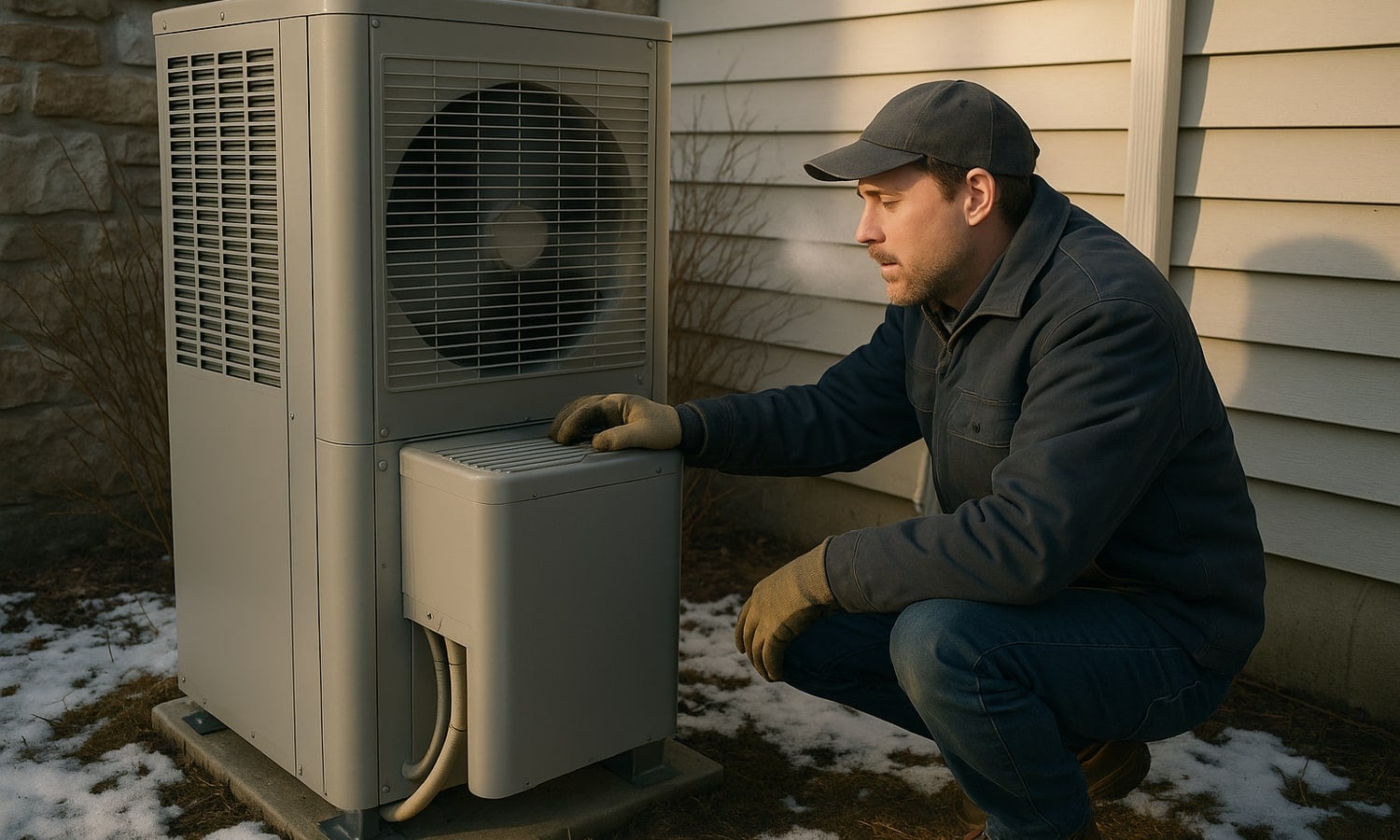
Yes, the right heat pump can keep your home heated and comfortable during a Chester County winter. The worry is fair, because winters here bring stretches where overnight lows drop into the teens or single digits. That is below the point where a standard single-stage air-source heat pump loses meaningful capacity and leans hard on electric backup. A cold-climate model is built for exactly this. It keeps running well below zero, and more to the point, it holds most of its rated output down around 5 degrees, where an entry-level unit has already handed the job to the strips.
That difference is the whole decision, and we have written up what temperature a heat pump stops being effective in full. Cold-climate variable-speed compressors keep pulling heat from outdoor air down into the low single digits, where basic units have already given up. Precision Air Heating and Cooling has been installing and servicing these systems since 1993, and across 33 years of local winters the pattern is consistent: the homes that struggle are almost always undersized or fitted with the wrong equipment class, not defeated by the cold itself.
Before you settle on a type, here is what changes across a January cold snap:
- A cold-climate unit holds useful output down to roughly 5 degrees, and keeps operating far below that
- A standard model starts losing efficiency below about 25 to 30 degrees
- Backup electric heat is 3 to 4 times costlier to run than the compressor
- Undersized equipment runs backup far more often than the cold requires
- A correct load calculation is what tells the two apart before purchase
Which Heat Pump Brands Are Worth Considering for Your Home?
Once the home's heating load, ductwork, and backup-heat requirements are understood, the next step is comparing equipment that fits those conditions. Precision Air Heating and Cooling installs Bosch, American Standard, Goodman, and Concord heat pumps, so you have several lines to weigh rather than one brand pushed at every house.
The type of heat pump matters at least as much as the name on it. A ducted heat pump suits a home with usable central ductwork, a ductless mini-split suits the rooms your ducts never reached, and a dual-fuel setup pairs a heat pump with the furnace you already own.
Bosch: Best for an Oil or Propane Home Going Dual-Fuel
Bosch heat pumps are worth considering when a homeowner wants a heat pump that can provide both heating and cooling, particularly in a home transitioning away from oil or propane. Bosch offers inverter-driven heat pump technology designed to vary compressor output instead of relying only on full-capacity cycles.
That variable-capacity operation can help the system adjust to changing heating and cooling demand. In a dual-fuel application, the heat pump can provide heating during appropriate conditions while a compatible furnace serves as the other heat source when the system's controls determine that backup heat is needed.
For an oil- or propane-heated Chester County home, the important evaluation is how the Bosch equipment's capacity, controls, ductwork, electrical requirements, and existing furnace work together. The contractor should determine the appropriate configuration rather than assuming every conversion should use the same setup.
American Standard: Best for Keeping the Ductwork You Already Have
American Standard heat pumps give you one central system for heating and cooling, in a range of efficiency levels and compressor configurations. That range is the point: it lets the equipment be matched to your house instead of the other way round.
So it is worth considering when you already have a central duct system and would rather not rebuild the way air moves through the house just to change the equipment at the end of it.
For Chester County homes, the important consideration is how the equipment performs as outdoor temperatures change. A contractor should review the system's heating capacity at lower temperatures, efficiency ratings, airflow requirements, thermostat controls, and compatibility with the existing ductwork before recommending a specific model.
Goodman: Best for Holding Down the Upfront Cost
Goodman heat pumps give homeowners another option when comparing equipment based on upfront investment, efficiency, available features, and long-term service considerations. Goodman offers both single-stage and variable-speed heat pump options, depending on the model and application.
A lower equipment price should not be the only consideration. The proposed system still needs to be correctly sized, matched to the home's ductwork, and installed according to the manufacturer's requirements. Installation quality can have a significant effect on airflow, comfort, efficiency, and reliability regardless of which equipment brand is selected.
For homeowners comparing Goodman with other brands, it makes more sense to compare the specific model, heating capacity, efficiency, controls, warranty, and installation scope rather than comparing brand names alone.
Concord: Best for a Straight Central System Replacement
Concord heat pumps provide another central heating and cooling option for homeowners comparing equipment for a ducted home. The appropriate model depends on the home's heating and cooling load, desired efficiency, ductwork, controls, and installation requirements.
Concord can be considered when the goal is to replace or upgrade central HVAC equipment while continuing to use a suitable existing duct system. As with the other brands, the contractor should verify that the home's airflow and distribution system can support the proposed heat pump before installation.
So Which Heat Pump Would We Choose for Your Home?

There is no single heat pump configuration that makes sense for every Chester County home. We would first look at the home's existing heating system, ductwork, comfort problems, heating and cooling load, and how long you expect to remain in the home before narrowing down the equipment options.
| Heat Pump Type | How It Works | May Make Sense For |
|---|---|---|
| Ducted air-source heat pump | Uses an outdoor heat pump and indoor air handler to distribute heated and cooled air through ductwork | Homes with suitable existing ducts |
| Ductless mini-split heat pump | Uses individual indoor air handlers connected to an outdoor heat pump without traditional ductwork | Older homes, additions, or spaces without usable ducts |
| Dual-fuel heat pump | Combines a heat pump with a furnace and switches between heat sources based on system controls and operating conditions | Homes currently using oil or propane that want to add a heat pump |
| Variable-speed heat pump | Adjusts compressor output to better match changing heating and cooling demand | Homes where comfort consistency and modulation are priorities |
| Zoned heat pump system | Uses separate zones or controls to manage different areas of the home | Homes with significant room-to-room temperature differences |
An oil- or propane-heated home may need a different strategy from a newer home with an existing central air system. Likewise, a home with good ductwork may be able to use a central ducted heat pump, while a home without suitable ducts may need a ductless approach.
The same principle applies to equipment efficiency. A higher efficiency rating can be valuable, but only when the system is correctly sized, properly installed, and able to deliver the required heating and cooling through the home's distribution system.
The right heat pump is not the one with the biggest efficiency number. It is the one that heats your house on the coldest week of the year, works with the ductwork you have, and makes financial sense for how long you plan to stay.
What Should You Check Before Choosing a Heat Pump?
Once you have narrowed down the system type and brands that fit your home, the next step is comparing the installation proposal itself. Two heat pumps with matching efficiency ratings can land you in two different houses, comfort-wise, if one is sized wrong or fitted without touching the airflow problems.
Before approving the installation, ask the contractor to walk you through these eight.
1. How the System Was Sized
Ask whether the recommendation came from a heating and cooling load calculation, or from reading the nameplate on your old furnace. Those two answers produce different equipment, and only one of them is about your house.
2. Low-Temperature Heating Capacity
Every heat pump publishes its output at specific outdoor temperatures. Ask for the number at 17 degrees and at 5, not the headline rating taken on a mild day.
3. Ductwork Compatibility
A heat pump moves more air than a furnace does. Confirm the existing supply and return can carry it, because undersized returns are the most common reason a good unit disappoints.
4. What Provides the Backup Heat
Electric strips, your existing furnace, or nothing at all. This one choice drives your January bill more than the efficiency rating on the box does.
5. Which Efficiency Ratings Apply
Heating and cooling are rated separately. A system sold on its cooling number can still be the weaker performer in the season you are worried about.
6. How the Thermostat Handles Changeover
On a dual-fuel system, the thermostat decides when the furnace takes over from the heat pump. Set badly, it burns oil on days the heat pump could have coped.
7. What the Installation Scope Covers
Electrical work, refrigerant lines, condensate drainage, duct changes, permits and commissioning. Anything left off the page is the thing that becomes a change order later.
8. Where the Warranty Stops
The manufacturer covers the equipment. The contractor covers the labor. Ask for both in writing, because a ten-year part is small comfort if the visit to fit it is billable.
A professional recommendation should also account for the condition of the existing system. If the contractor is proposing a heat pump without asking about comfort problems, current heating costs, ductwork, insulation, or the home's existing equipment, you have not yet provided enough information for a meaningful system comparison.
What Can Make a Heat Pump Underperform After Installation?
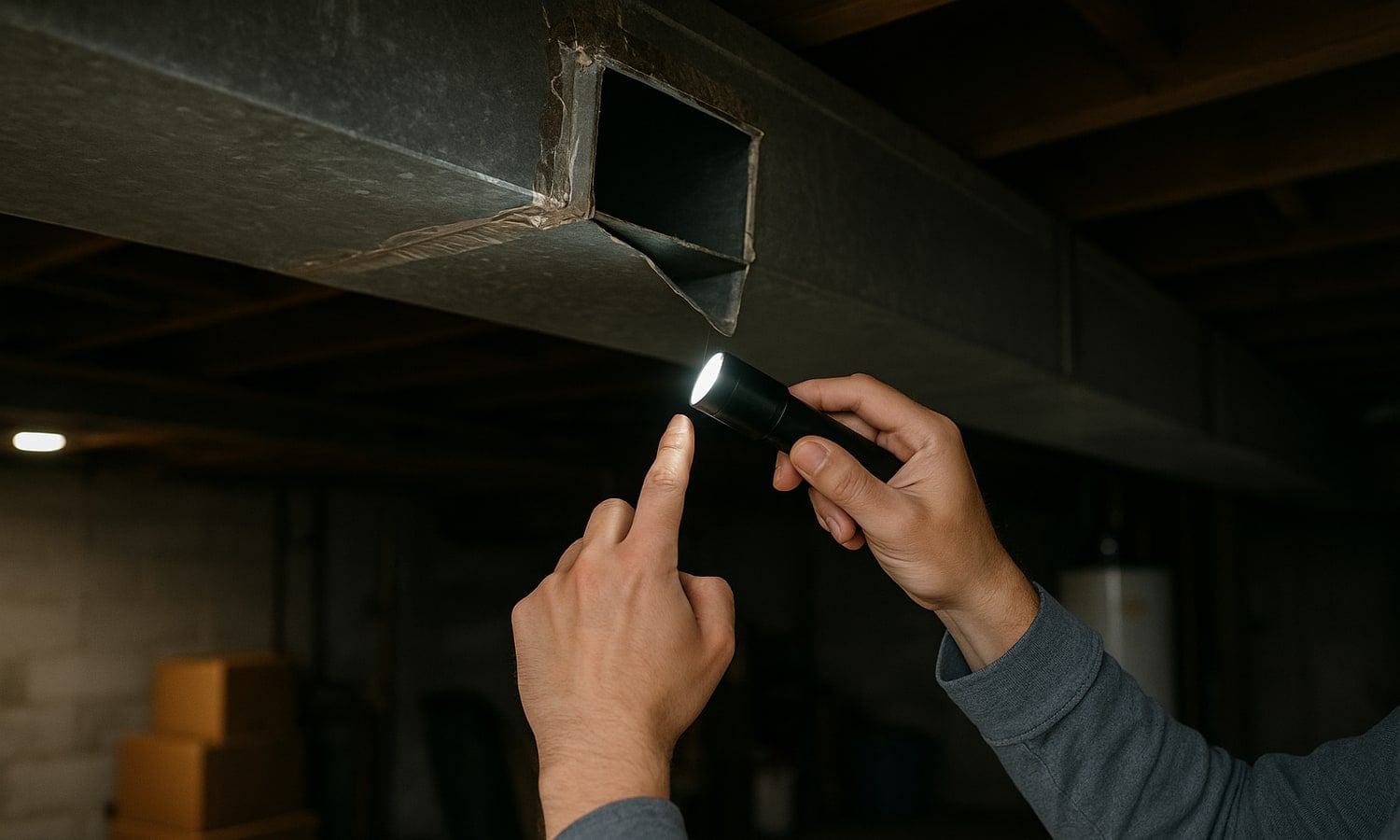
The equipment is only one part of the system. Four things undo a good unit after it is installed.
1. A Restricted Return
A unit with an excellent rating on paper still struggles when the return-air path is too small. The spec sheet assumes airflow the ductwork never delivers.
2. Equipment That Is Too Big
An oversized heat pump short-cycles instead of running long and steady, which is the opposite of how it produces even temperatures.
3. Duct Leakage
Air lost into a crawlspace or attic was paid for and never reached a room. Older houses here leak more of it than owners expect.
4. Controls Set Up Wrong
A thermostat that calls for auxiliary heat too eagerly will run the expensive strips on days the compressor could have handled alone.
So ask, before installation, how the contractor will verify performance afterwards. Airflow, static pressure, temperature split, refrigerant operating conditions, electrical readings and thermostat behavior are all measurable on the day, and a contractor who measures them is one who will find these four before you do.
Is a Heat Pump a Good Option for an Older Chester County Home?
An older home does not automatically rule out a heat pump, but the house itself needs to be evaluated before equipment is selected. Older construction may have areas of air leakage, uneven insulation, aging ductwork, or additions that were not designed around the same heating and cooling system.
Those conditions can affect the calculated heating load and the way conditioned air moves through the house. In some cases, sealing the envelope or correcting the ducts is the more important half of the project, and a larger heat pump is the expensive way to avoid doing it.
This is especially important when replacing oil or propane equipment. The goal is a system matched to what the house needs, not one sized off the old furnace's nameplate as a shortcut.
Frequently Asked Questions
Which heat pump is best for a Chester County home?
The best system depends on the home's heating load, ductwork, current heating fuel, comfort requirements, and budget. Cold-climate equipment, ducted systems, ductless systems, and dual-fuel configurations can all make sense in different homes.
Are Bosch, American Standard, Goodman, and Concord heat pumps all options for Chester County homeowners?
They can be equipment options through Precision Air Heating and Cooling, but the right brand and model depend on the home. The contractor should evaluate sizing, low-temperature capacity, ductwork, controls, efficiency, and installation conditions before recommending a specific system.
Should I choose a heat pump or keep my oil or propane furnace?
That depends on your home's current heating performance, fuel costs, electrical service, equipment condition, and goals for the replacement. A dual-fuel system can also be considered when a homeowner wants to add a heat pump while retaining the existing furnace for backup.
Can I use my existing ductwork with a heat pump?
Possibly. Existing ducts should be evaluated for sizing, leakage, insulation, return-air capacity, and static pressure before the heat pump is selected. If the duct system cannot provide the required airflow, modifications or an alternative system configuration may be necessary.
Does a higher-efficiency heat pump always make more sense?
Not necessarily. Efficiency should be considered alongside heating capacity, installation cost, expected operating conditions, ductwork, equipment life, and how long you expect to own the home. A properly matched system with appropriate installation can be a better fit than equipment chosen solely for its highest rating.
Why Choose Precision Air Heating and Cooling for Heat Pump Installation in Chester County?
Choosing the right heat pump starts with the home, not with a brand off a list. Precision Air Heating and Cooling has 33 years of local experience and licensed, insured technicians.
We help Chester County homeowners compare options based on the home's heating and cooling requirements, existing ductwork, current fuel source, and the heat pump configuration that fits the property.
Our approach considers the factors that affect long-term performance, including system sizing, equipment selection, airflow, ductwork, controls, and the home's existing heating setup. Whether you are replacing an aging oil or propane system, considering a dual-fuel setup, or looking for one system to handle both heating and cooling, these details should be evaluated before equipment is selected.
A conversion from oil or propane changes the ductwork question as much as the equipment question, which is where our heat pump installation and replacement work starts. If the cooling side is tired too, the same visit can price air conditioning alongside it rather than making you book twice.
The in-home estimate on a replacement is free. Call (484) 690-4328 and we will run the load calculation first and show you the numbers it produces before anyone talks about a brand.
Owner & President of Precision Air Heating & Cooling, the independent, family-owned company that has served West Chester and Chester County homes since 1993.