
What a Load Calculation Is and Why Precision Air Won’t Skip This Step During HVAC Installation
 Eric Light August 17, 2026 11 min read
When you replace an HVAC system, one early step quietly decides whether your new equipment will actually keep the house comfortable: the load calculation. Many contractors skip it to save time, then size the system by square footage or by simply matching your old unit. Precision Air Heating and Cooling refuses to cut that corner.
A load calculation is the engineering behind a comfortable, efficient home. Skip it, and you risk an oversized or undersized system that struggles with humidity, cycles constantly, and wears out early. Do it correctly, and your air conditioning installation, furnace replacement, or heat pump installation has a much better chance of fitting the home from day one.
This guide answers a simple but important question: what is an HVAC load calculation, and why will Precision Air Heating and Cooling always perform one before installation? You will learn what it measures, why square footage alone is never enough, how poor sizing hurts comfort, and how the right calculation helps prevent expensive problems long after installation is complete.
What Is an HVAC Load Calculation?

A load calculation is a detailed analysis of how much heating and cooling your specific home requires, measured in BTUs. The industry standard is the ACCA Manual J residential load calculation, which HVAC professionals use to size equipment accurately.
Why is Manual J different from a guess?
Manual J treats your home as a unique system with its own heat gains and heat losses throughout the year. In simple terms, it answers a few practical questions:
- How much heat does your home gain in summer?
- How much heat does your home lose in winter?
- What equipment capacity can handle those loads without overworking or short cycling?
That number helps determine the correct size for your air conditioner, heat pump, or furnace. Getting it right is the foundation of every comfortable installation, which is why Precision Air Heating and Cooling treats the load calculation as non-negotiable rather than optional.
What a Load Calculation Actually Measures
A proper Manual J calculation goes far beyond the size of your house. It accounts for the details that decide how your home really gains and loses heat, including several things most homeowners never think about when picturing a new system.
What details change the size your home needs?
- Square footage and ceiling height: how much conditioned air the system must handle.
- Insulation levels: how well your walls, attic, and floors slow down heat transfer.
- Windows and orientation: how glass, sun exposure, and direction affect heat gain.
- Air infiltration: where outside air leaks in around doors, windows, and framing.
- Occupancy and usage: how people, appliances, and lighting add heat indoors.
- Ductwork condition: whether leaky or undersized ducts are stealing comfort before air reaches the room. ENERGY STAR notes that well-designed and properly sealed ductwork can improve comfort, efficiency, and safety.
- Local climate: how Chester County's humid summers and cold winters shape the design conditions.
Why can two same-size homes need different HVAC systems?
Two homes with identical square footage can need very different systems once insulation, windows, shade, ductwork, and sun exposure are measured. That is why a real calculation, not a quick estimate, produces equipment that fits your home instead of a generic regional average.
If the ducts are part of the problem, the answer may also include ductwork design and installation instead of only replacing the equipment.
Why Square Footage Alone Is Not Enough
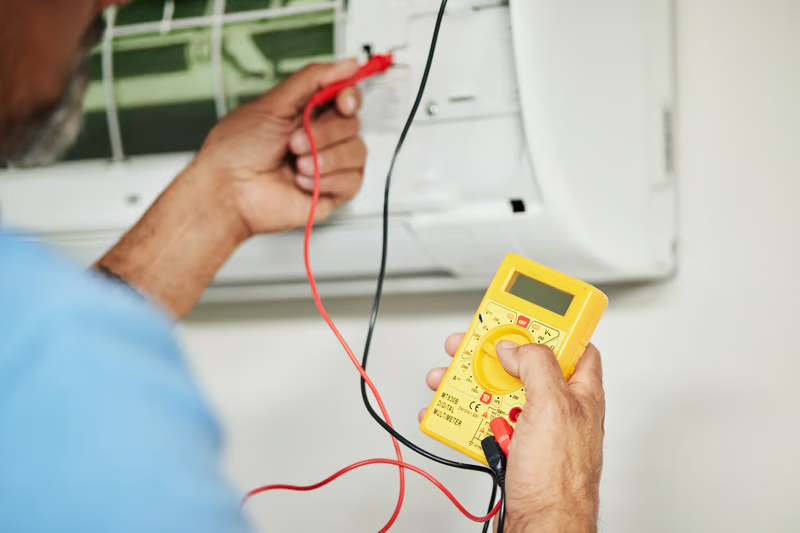
The old rule of thumb, roughly one ton of cooling per 400 to 600 square feet, ignores almost everything that actually matters. It treats a shaded, well-insulated home the same as a sun-baked one with single-pane windows. In reality, those homes have very different loads, and sizing them identically guarantees that at least one of them will be uncomfortable.
What does square footage leave out?
Square footage ignores ductwork, air leakage, ceiling height, insulation, sun exposure, room layout, and how your family uses the home. A contractor who quotes a tonnage within minutes of arriving has not measured any of this.
That shortcut is convenient for the contractor, but it can cost you comfort, efficiency, and money for the entire life of the equipment. The U.S. Department of Energy has also noted that oversized HVAC equipment can reduce efficiency, increase wear, and increase indoor humidity during summer.
What Happens When the HVAC System Is the Wrong Size?
The wrong equipment size creates different problems in a West Chester home. An oversized air conditioner may satisfy the thermostat quickly but shut down before it has enough runtime to manage summer humidity effectively. An undersized system has the opposite problem: it can run for long stretches during a hot Chester County afternoon and still struggle to maintain the desired temperature.
What happens when the system is too large?
Imagine a system that cools the downstairs quickly and shuts off while the upstairs still feels uncomfortable. The thermostat is satisfied, but the home has not actually reached even comfort.
Oversized systems can cause:
- Short cycles that start and stop too often
- Poor humidity control in summer
- Uneven temperatures from room to room
- Extra wear on compressors, motors, and electrical parts
- A system that feels powerful but still uncomfortable
What happens when the system is too small?
An undersized system shows up most during extreme weather. Instead of reaching the thermostat setting and cycling normally, it may run for hours and still fail to keep up.
Undersized systems can cause:
- Long run times during hot afternoons or cold nights
- Rooms that never reach the set temperature
- Higher energy use because the system rarely rests
- More strain on the equipment
- Comfort complaints that continue after installation
Capacity matters, but it is not the only factor. Airflow, ductwork, insulation, and thermostat location should all be checked before blaming the equipment alone.
| Equipment Size | What You May Notice in a West Chester Home |
|---|---|
| Properly sized | More consistent temperatures and appropriate operating cycles |
| Oversized | Frequent cycling, uneven comfort, and less effective humidity removal |
| Undersized | Long runtimes and difficulty maintaining the thermostat setting |
The important point is that neither the biggest nor the smallest system is automatically better. The equipment should match the home's calculated heating and cooling requirements so it can operate appropriately under the conditions it was designed to handle.
How Does Correct Sizing Make the House Feel Better?
Correct sizing matters because HVAC equipment spends most of its life responding to changing loads. A properly sized system has a better chance of maintaining steady indoor temperatures without constantly starting and stopping or running for too long.
Why is fast cooling not always good cooling?
The goal is not simply to make the thermostat reach its setting as quickly as possible. The goal is to keep the home comfortable while allowing the equipment to run in a healthy range. That matters most during Chester County humidity, when the system needs enough runtime to pull moisture from the air.
What does correct sizing help protect?
A good load calculation helps protect:
- Better humidity control in summer
- More even room-to-room comfort
- Less short cycling
- Lower strain on major parts
- Better efficiency from the equipment you paid for
- A clearer reason for choosing one system size over another
Instead of saying, "Your old system was 4 tons, so we will install another 4-ton unit," the recommendation can be tied to the home's current insulation, windows, orientation, occupancy, ductwork, and other conditions.
That distinction can matter for the next 15 to 20 years, which is why accurate sizing should be settled before the equipment is ordered, not adjusted after installation.
How Precision Air Heating and Cooling Performs a Load Calculation
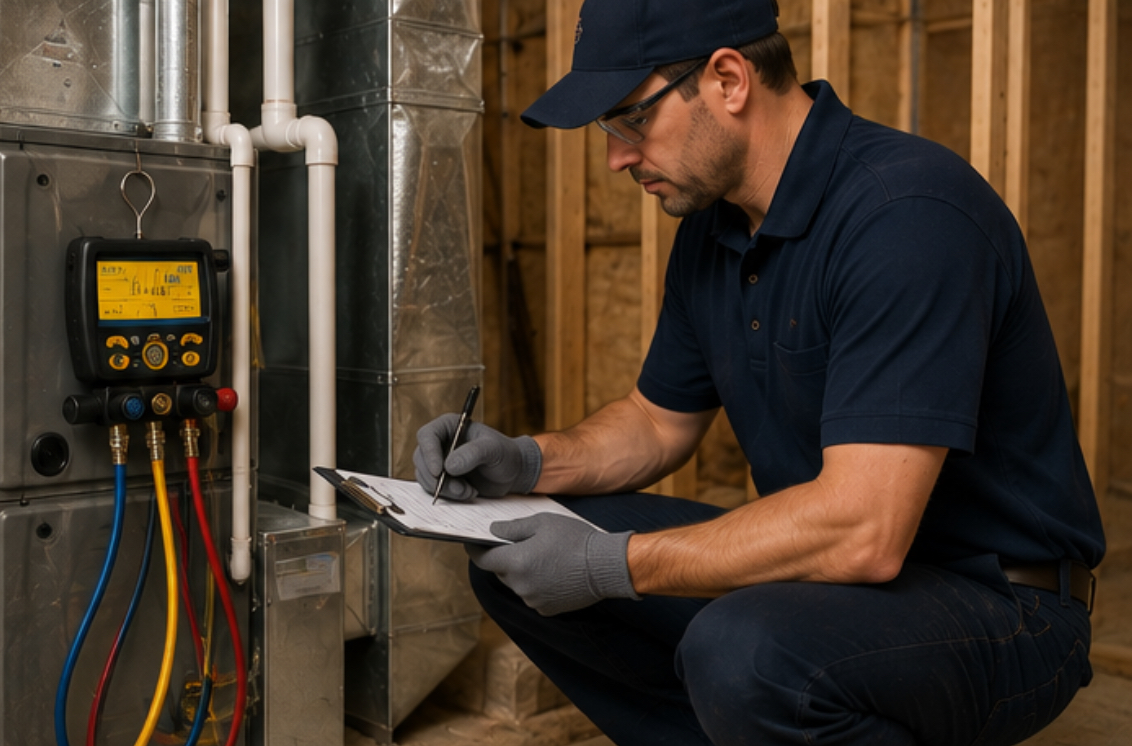
Precision Air Heating and Cooling treats the load calculation as the first real step of every installation, not an afterthought. Before recommending equipment, our technicians look at the home itself: room layout, insulation, windows, orientation, sun exposure, ductwork, and the comfort problems you already notice.
How does that change the installation plan?
From there, we run an ACCA Manual J calculation to determine the capacity your West Chester home actually requires. Then we match the calculation to the right installation path, whether that means an efficient air conditioning system, a heat pump installation, a furnace replacement, or a ductless mini-split for a problem room.
The process is simple:
- Measure the home instead of guessing from square footage
- Review insulation, windows, sun exposure, and room layout
- Inspect ductwork and airflow conditions
- Run the Manual J calculation
- Match equipment size to the home’s actual load
- Explain the recommendation before installation begins
Because we take the time to size correctly, the new system is less likely to fight the same comfort and efficiency problems that oversized or undersized systems create.
When Should Your Home Get a New Load Calculation?
A load calculation should not be based on what your old HVAC system used to have. If your West Chester home has changed since the last system was installed, the amount of heating or cooling it needs may have changed too.
This is especially important when replacing equipment that has been in service for 10, 15, or even 20 years. Matching the old unit's capacity may simply repeat a sizing decision that was made under completely different conditions.
Did you improve the home since the last system was installed?
New insulation, energy-efficient windows, air sealing, or a remodeled portion of the home can reduce heat gain or heat loss. The new HVAC system should account for those improvements rather than automatically matching the previous equipment.
After an Addition
Adding a bedroom, sunroom, finished attic, or expanded living area changes the home's heating and cooling requirements. The contractor should include the additional space when determining the capacity needed for the entire system.
Have certain rooms always been uncomfortable?
If certain rooms have always been difficult to heat or cool, that history is worth discussing before replacement. A new calculation can help determine whether the issue relates to equipment capacity, insulation, windows, ductwork, or another part of the home's design.
That is also where related fixes may come into the conversation, such as zoning systems, ductwork design, or a ductless mini-split installation for one stubborn space.
Are you changing the type of HVAC system?
Switching from a traditional air conditioner and furnace to a heat pump can change how the system handles both heating and cooling. The equipment should be selected based on the home's current loads rather than simply replacing one type of system with another at the same capacity.
A new load calculation is especially valuable when the home has changed significantly since the previous installation. It gives the contractor current information to work from instead of treating an old equipment size as proof of what your home needs today.
Ready for HVAC Installation That Starts With the Right Size?
A load calculation is not paperwork or a sales formality. It is the step that decides whether your new system will keep you comfortable and efficient for the next two decades. Precision Air Heating and Cooling performs one on every installation because we have spent 33-plus years in West Chester seeing what happens when contractors skip it and guess instead.
Our locally owned team would rather invest the time upfront than leave you with an oversized system that short cycles, struggles with humidity, and fails early. Proper sizing is one of the clearest signs that a contractor is focused on your long-term comfort rather than the fastest possible installation or the biggest possible unit.
If you are planning a new system, start with the calculation before you start comparing boxes. Precision Air Heating and Cooling can help with:
- Air conditioning installation and replacement for homes that need better summer comfort
- Heat pump installation and replacement for efficient heating and cooling in one system
- Furnace installation and replacement for dependable winter heat
- Ductwork design and installation when airflow is part of the problem
- Precision Comfort Club maintenance to protect the system after it is installed
Call Precision Air Heating and Cooling before you replace your HVAC system. We will measure first, explain the numbers, and help you choose equipment that fits your West Chester home instead of forcing your home to fit the equipment.
Owner & President of Precision Air Heating & Cooling, the independent, family-owned company that has served West Chester and Chester County homes since 1993.