
Why Is My Heat Pump Steaming? What Defrost Mode Looks Like in Winter
 Eric Light November 16, 2026 10 min read
You look outside on a cold winter morning and see a thick white cloud rising from your heat pump. The outdoor fan has stopped, the unit makes a sudden whooshing sound, and water is dripping from the bottom. It can look like the equipment is overheating or smoking, especially if you have never seen it happen before.
In many cases, a heat pump steaming on a cold morning is running a normal defrost cycle. During winter heating, frost can collect on the outdoor coil. The system periodically reverses its refrigerant flow to warm that coil and melt the buildup. The resulting water vapor can look like smoke, but it is usually harmless.
What matters is whether the unit completes the cycle and returns to normal heating. A brief cloud of white vapor is generally expected. Persistent ice, unusual noises, burning odors, or heating that never resumes point to a different problem.
Why Is My Heat Pump Steaming or Smoking in Winter?
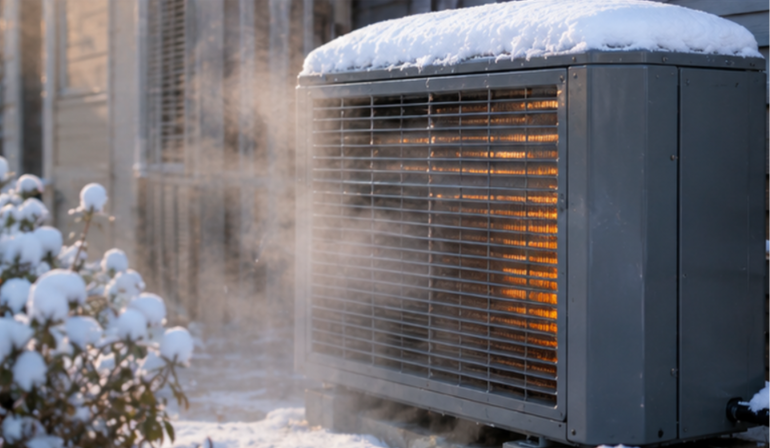
A white cloud rising from your outdoor heat pump is usually water vapor released during the defrost cycle. As the system extracts heat from outdoor air, its coil becomes cold enough for moisture to freeze on the surface. When defrost mode starts, the coil warms up, melts the frost, and releases moisture into the cold air.
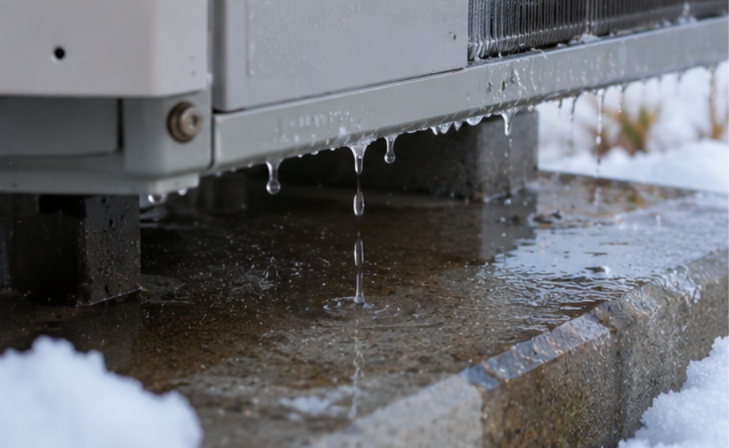
The amount of vapor depends on how much frost has collected and the outdoor conditions. You may also notice water dripping beneath the unit and the outdoor fan pausing while the coil clears.
Vapor and smoke can look alike from a window, but they are easy to tell apart up close. Normal defrost vapor is white and has no burning odor. Dark or gray smoke, a burning electrical smell, or visible scorching can point to an electrical or mechanical problem.
If you notice any of these warning signs, turn the system off if it is safe to do so and call an HVAC professional rather than assuming the unit is defrosting.
Why Does Frost Build Up on a Heat Pump's Outdoor Coil?
Frost builds up because the outdoor coil has to run colder than the outdoor air to pull heat from it. A heat pump does not create heat by burning fuel. In heating mode, it transfers heat from outdoor air into your home.
When the coil surface drops below the outdoor air's dew point, moisture can collect on the fins. If the surface is below freezing, that moisture turns into frost. As the buildup increases, it restricts airflow and makes it harder for the system to absorb heat.
Outdoor conditions have a major influence on how quickly frost develops:
- Cold temperatures: The outdoor coil can operate below freezing even when the air temperature is slightly above it.
- High moisture levels: Damp air provides more moisture that can collect and freeze on the coil.
- Rain, fog, and wet weather: Moisture in the air can contribute to faster frost formation when temperatures are low enough.
- Changing winter conditions: A mild, damp morning followed by freezing temperatures can create conditions where frost develops quickly.
A light coating of frost is not necessarily a sign of trouble. Heat pumps are designed to manage normal winter frost through automatic defrost operation. The concern is ice that keeps accumulating instead of clearing.
A properly functioning heat pump should be able to manage normal frost buildup without leaving the outdoor coil covered in ice. Consistent heating, proper airflow and a coil that clears its own frost are all signs your heat pump will thrive in cold weather.
What Is Heat Pump Defrost Mode and Why Does It Run?
Defrost mode is an automatic operating cycle that removes frost from the outdoor coil. Without it, ice could gradually restrict airflow and reduce the system's ability to transfer heat.
Most conventional air-source heat pumps use a reversing valve to temporarily change the direction of refrigerant flow. This allows hot refrigerant to warm the outdoor coil, even though the system is normally extracting heat from outside during winter.
The defrost controls monitor operating conditions and determine when a cycle is needed. Depending on the equipment, the system may use temperature sensors, operating time, or other control inputs. There is no single schedule that applies to every heat pump.
A typical defrost sequence may include:
- The system detects frost conditions: Its controls determine that the outdoor coil needs to be cleared.
- Refrigerant flow reverses: The reversing valve changes the system's operating direction so the outdoor coil receives heat.
- The outdoor fan stops or slows: This helps the coil warm up rather than being cooled by outdoor airflow.
- Frost melts: Water runs off the coil, and some of it may turn into visible vapor.
- Normal heating resumes: The system exits defrost and returns to its regular heating operation.
Many systems also use auxiliary heat during defrost to help maintain indoor comfort. However, the exact operation depends on the system design and controls. A short change in how warm the air feels at the vents does not automatically mean something is broken.
What Does a Normal Defrost Cycle Look and Sound Like?
A normal defrost cycle looks like a pause, a whoosh and a white cloud, followed by heat again, and each step has its own sign.
The Outdoor Fan Stops Temporarily
One of the first things you may notice is that the outdoor fan stops spinning while the system continues operating. This is a normal part of many defrost cycles. Stopping the fan helps the outdoor coil warm up so frost can melt more effectively.
You Hear a Whoosh or Change in Sound
The reversing valve changes the direction of refrigerant flow, which can produce a noticeable whoosh, click, or brief change in operating sound. You may also hear water dripping as the frost melts. These sounds are generally not concerning when they occur briefly during an otherwise normal cycle.
White Vapor Rises From the Unit
As the outdoor coil warms, melting frost and water can produce a cloud of white vapor. The amount varies depending on how much frost has collected and the outdoor conditions. A heavier plume after a damp, freezing night does not necessarily mean the system is malfunctioning.
Heating Returns After the Cycle
Once the outdoor coil has cleared, the system switches back to heating. The outdoor fan typically starts again, and normal operation resumes. Some systems may take a short time to settle into their usual heating pattern.
A healthy defrost cycle should finish without leaving the outdoor coil buried in ice. The exact duration varies by equipment and conditions, but many cycles take approximately 5 to 15 minutes. Check your manufacturer's guidance if you are unsure what is normal for your model.
When Is Heat Pump Ice or Steam a Sign of Trouble?
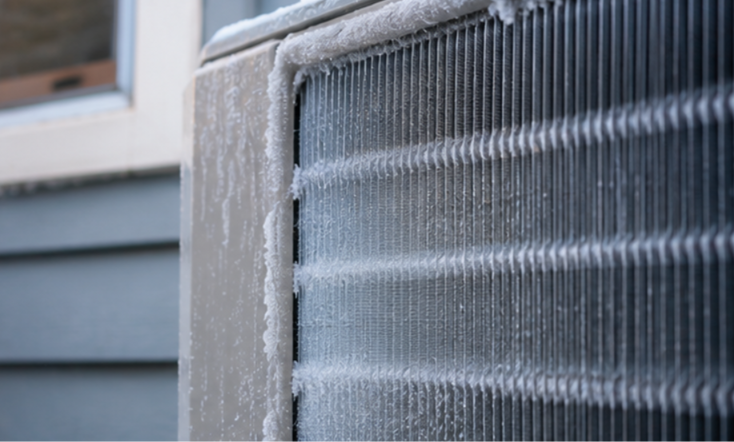
Ice or steam is a sign of trouble when the coil stays iced after the cycle ends, the heat does not come back, or the smoke is dark. If the unit clears its coil and returns to heating, the cycle is likely doing its job. If ice continues to build or the system struggles to resume heating, it may need professional attention.
| What you notice | What it may indicate |
|---|---|
| White vapor that clears within minutes | Normal defrost operation |
| Light frost that melts during defrost | Normal winter operation |
| Thick ice that remains after repeated cycles | Defrost, airflow, or refrigerant problem |
| Outdoor fan or coil completely encased in ice | Possible mechanical or control fault |
| Dark smoke or burning odor | Possible electrical or mechanical hazard |
| Heat pump stays in defrost or does not resume heating | Possible sensor, control board, or reversing valve issue |
If the unit is covered in solid ice, shut it off at the thermostat and arrange an inspection.
Do not chip away at the ice, use sharp tools, or pour hot water over the coil. These actions can damage delicate fins and components or create additional freezing problems. If you see smoke or smell something burning, treat that as a separate safety concern rather than an ordinary defrost cycle.
How Do West Chester Winters Affect Heat Pump Defrosting?
Homeowners in West Chester and surrounding Chester County communities experience winter conditions that can create regular frost buildup on outdoor heat pump coils. Temperatures often move around the freezing point, and damp weather can make frost formation more noticeable.
This combination matters because frost formation depends on more than the outdoor temperature alone. Moisture in the air, coil temperature, and how long the system has been running all influence when defrost is needed.
Outdoor temperature also affects how efficiently a heat pump can extract heat from the surrounding air. As temperatures drop, some systems may need more energy or supplemental heating to maintain indoor comfort. The exact performance depends on the equipment model, which also decides the temperature where a heat pump becomes ineffective.
Snow and drainage also deserve attention. Keep snow, leaves, and other debris from blocking the outdoor unit's airflow. Make sure melting water can drain away from the base rather than collecting and freezing underneath the equipment. Do not cover the unit while it is operating, and avoid placing objects close to the coil.
If your heat pump repeatedly develops heavy ice, struggles to heat your home, or appears to remain in defrost, have it inspected rather than assuming the weather is entirely responsible.
Why Choose Precision Air Heating and Cooling in West Chester?
A heat pump producing white vapor during a short defrost cycle is usually doing what it was designed to do. But a unit that remains covered in ice, repeatedly fails to return to heating, or develops unusual operating symptoms needs a proper diagnosis. Identifying the cause matters because a sensor issue, reversing valve problem, airflow restriction, and refrigerant problem require different repairs.
Precision Air Heating and Cooling has served homeowners in West Chester and Southeastern Pennsylvania since 1993. Our locally owned and independent company works across Chester County and neighboring Delaware and Montgomery counties. Our own employees handle the work rather than subcontractors.
If your heat pump is not clearing frost properly, our heat pump repair service can help identify what is interfering with normal operation. We inspect the relevant components, explain what we find, and give you the price in writing so you can decide.
Do not wait for a completely iced-over unit or a cold house to make the call. Contact Precision Air Heating and Cooling at (484) 690-4328 to schedule heat pump service in West Chester and nearby communities.
Frequently Asked Questions
Should I turn my heat pump off when it starts steaming?
No, you should not turn your heat pump off when it starts steaming, because steam usually means defrost is working. Stopping mid-cycle can leave frost on the coil. Let the cycle finish, and only switch it off if you see dark smoke, smell burning or find thick ice.
Why does my heat pump defrost more often on damp days?
A heat pump defrosts more often on damp days because moist air leaves more frost on the outdoor coil. Fog, drizzle and temperatures in the 30s build frost fastest. Frequent cycles in that weather are normal, as long as each one clears the coil.
Does a heat pump use more electricity during defrost?
Yes, a heat pump uses some extra electricity during defrost, mostly when backup heat runs to keep the air from your vents warm. Each cycle is short, so the added cost is usually small compared with a coil left covered in frost.
Is the steam from a heat pump harmful to breathe?
No, the steam from a heat pump in defrost is not harmful to breathe, because it is water vapor from melting frost. A heat pump burns no fuel, so the cloud carries no combustion gases. Smoke with a burning smell is different and means the system should be turned off.
Owner & President of Precision Air Heating & Cooling, the independent, family-owned company that has served West Chester and Chester County homes since 1993.