Why Does a High-Efficiency Furnace Shut Off in the Cold?
 Eric Light November 16, 2026 10 min read
Your furnace runs normally through most of the winter, then suddenly starts shutting off during a freezing morning. You hear it start, feel warm air for a few minutes, and then everything goes quiet. The thermostat still calls for heat, but your home keeps getting colder. What changed?
A high-efficiency furnace often shuts off in extreme cold because its condensate drain line has frozen or its outdoor PVC intake or exhaust vent has become blocked by snow or ice. Both problems can interfere with normal operation and activate safety controls. The shutdown protects the equipment, but recurring lockouts need a proper diagnosis.
What Freezes First on a High-Efficiency Furnace?
The condensate drain and the outdoor vent pipes freeze first on a high-efficiency furnace, because both carry water out of the house. A high-efficiency furnace works differently from an older conventional furnace. It extracts additional heat from combustion gases, which causes water vapor to condense inside the system. That water must drain away, while the remaining exhaust gases leave through a dedicated vent.
When something blocks the condensate drain or restricts the outdoor vent, the furnace may detect an unsafe operating condition. Its control board can stop the burner or prevent another heating cycle. The exact shutdown response depends on the furnace model and the safety controls installed.
The two cold-weather trouble spots are:
- Condensate drain: Water freezes inside an exposed line or backs up behind a blockage.
- PVC vent termination: Ice or drifting snow restricts the combustion air intake or exhaust opening.
The first step is understanding which part of the system is affected. A puddle near the furnace suggests a different problem than an ice-covered outdoor pipe, and the repair is different too.
How Does a Frozen Condensate Drain Stop the Furnace?
A frozen condensate drain traps water inside the furnace, and on many models a safety switch stops the burner before that water overflows. The water normally travels through a collection area, trap, and drain line before reaching an approved drain or condensate pump. If any part becomes clogged or freezes, water can back up inside the system.
Some furnaces use a float switch or condensate safety control to detect this problem. When water reaches a certain level, the control can interrupt furnace operation to prevent overflow. Other models use different arrangements, so a drain problem does not always produce the same fault code or shutdown sequence.
A few conditions can cause the drain to stop working:
- Frozen drain line: An exposed section in an unheated basement, crawlspace, or garage freezes and blocks water flow.
- Clogged condensate trap: Sludge or debris restricts the passage through the trap.
- Kinked drain tubing: A bent or poorly routed hose prevents water from flowing freely.
- Condensate pump failure: A failed pump cannot move water to the intended drain.
- Improper drain slope: Water collects in a low section instead of flowing away.
One useful clue is water around the furnace cabinet or condensate pump. If the furnace shuts down at the same time you notice standing water, the drainage system deserves attention. However, a technician should inspect the complete drain assembly before identifying the failed component.
How Can Snow or Ice Block a Furnace Vent?
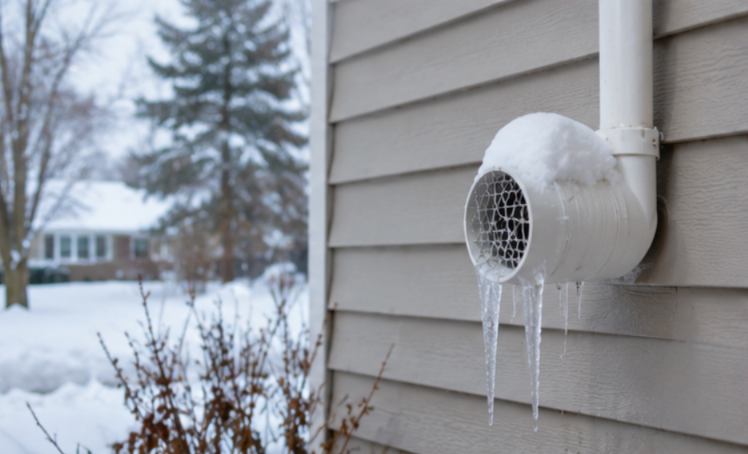
Snow drifts and ice from the furnace's own exhaust can close off the two PVC pipes on your outside wall. They are easy to overlook because they do not look like a traditional chimney vent. One pipe brings combustion air into the furnace, while another carries exhaust gases outside. Both openings need to remain clear for the system to operate correctly.
During a Chester County cold snap, moisture from the exhaust can freeze near the termination. Windblown snow can also cover a low sidewall opening. When airflow becomes restricted, the furnace may fail to establish the conditions required for safe ignition.
Ice Can Gradually Cover the Exhaust Opening
Exhaust from a condensing furnace contains moisture. When it reaches the cold outdoor air, some of that moisture can condense around the termination and freeze. Repeated freezing can build an ice restriction that makes it harder for exhaust gases to leave the system.
Snow Can Bury a Low Sidewall Vent
Some furnace vents terminate through an exterior wall relatively close to the ground. After snowfall, drifting snow or piles created during shoveling can cover the intake or exhaust opening. The furnace may then fail to start because the combustion air or exhaust path is restricted.
A Blocked Vent Can Prevent the Pressure Switch From Closing
The inducer motor helps move combustion gases through the furnace and vent system. A pressure switch monitors the conditions needed for safe operation. If an obstruction prevents the required pressure from being established, the control board may stop the ignition sequence.
The Intake and Exhaust Pipes Can Both Cause Problems
The intake and exhaust are separate openings, but both need adequate clearance. Snow or ice covering either one can interfere with furnace operation. If you cannot identify which pipe is which, do not try to dismantle or probe them. A technician can inspect the complete vent arrangement.
Repeated Ice Buildup Can Point to an Installation Issue
If the same exhaust opening freezes every time temperatures drop, clearing the ice may only provide temporary relief. Vent pitch, termination placement, drainage, and manufacturer installation requirements may need to be checked. The goal is to correct the condition causing the ice, not just remove it after every cold night.
Why Does a High-Efficiency Furnace Start and Then Shut Off Again?
If your furnace starts, runs briefly, and shuts down before your home reaches the thermostat's set temperature, a safety control may be interrupting the heating cycle. A blocked vent can prevent the pressure switch from detecting proper airflow, while backed-up condensate can interfere with drainage or trigger a safety shutdown.
This is different from normal furnace cycling. A properly operating furnace turns off after reaching the desired indoor temperature. If your home remains cold while the system repeatedly starts and stops, the heating cycle may be getting interrupted by an underlying problem.
A pressure-switch fault does not automatically mean the switch itself has failed. Blocked vent pipes, water in the pressure tubing, or condensate drainage problems can produce similar symptoms.
The same interruption may also leave you feeling cool air from the vents, which is one of several reasons a furnace blows cold air. A qualified technician can inspect the system and identify what is triggering the shutdown before replacing parts.
Which Symptoms Point to a Drain or Vent Problem?
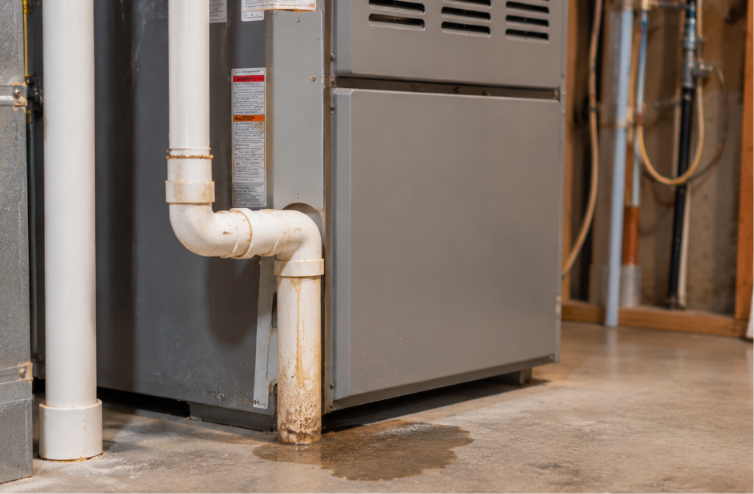
Water on the floor points to the condensate drain, and ice or snow on the outdoor pipes points to the vent. The timing of the shutdown can help narrow down the rest before a technician arrives.
| What you notice | Possible cause | What it suggests |
|---|---|---|
| Water pooling near the furnace | Blocked or frozen condensate drain | Water may not be leaving the system |
| Ice around the outdoor exhaust opening | Frozen exhaust condensation | Exhaust flow may be restricted |
| Snow covering one or both PVC pipes | Blocked intake or exhaust | Combustion airflow may be affected |
| Furnace starts, then stops repeatedly | Vent or condensate safety issue | The system may be entering a safety lockout |
| Furnace keeps shutting down after snow is cleared | Another unresolved fault | Drainage, vent routing, or controls need inspection |
These are diagnostic clues, not guaranteed answers. For example, a furnace can shut down from a pressure-switch problem even when the outdoor vent looks clear. A proper inspection checks how the furnace runs rather than relying on one symptom.
What Can You Safely Check Before Calling for Furnace Repair?
You can safely check the outdoor vent pipes and the floor around the furnace without opening the equipment. Do not remove furnace panels, disconnect tubing, or attempt to thaw internal components.
Here is what you can safely look for:
| What you can do | What you should avoid |
|---|---|
| Clear loose snow around outdoor pipes by hand | Inserting tools into PVC openings |
| Look for water around the furnace | Opening sealed furnace components |
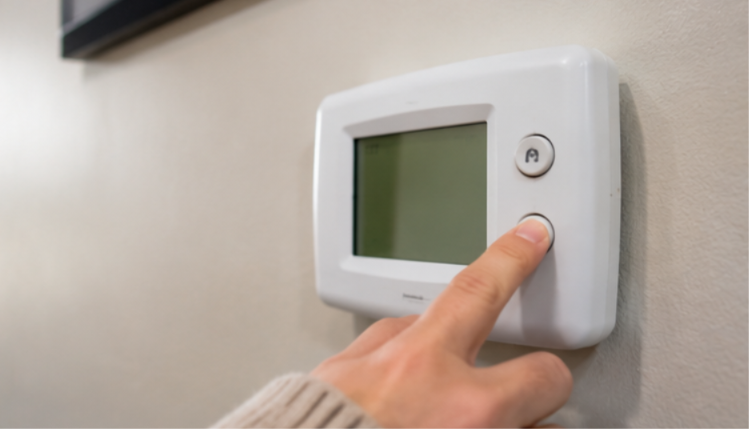
| Read the thermostat display and fault indication | Bypassing a pressure switch or safety control |
| Follow the manufacturer's restart instructions | Repeatedly resetting a furnace that keeps locking out |
| Arrange professional service if the issue returns | Using a torch or open flame to thaw PVC |
If clearing loose snow does not restore operation, or the furnace shuts down again, it is time to bring in a qualified HVAC professional.
Why Choose Precision Air Heating and Cooling for Furnace Repair in West Chester?
A high-efficiency furnace that shuts off during a cold snap does not automatically need an expensive replacement. A frozen condensate line, restricted vent, or drainage issue may be responsible. The important part is finding the fault before anyone recommends a repair.
Precision Air Heating and Cooling has served West Chester and surrounding Chester County communities since 1993, with our own employees, not subcontractors. We charge a flat diagnostic fee, told to you up front, and show you the frozen line or blocked pipe before we price the repair.
If your furnace keeps shutting off, our team can help with furnace repair in West Chester, PA. No heat at all on a freezing day is a job for our emergency heating service. Call (484) 690-4328 to speak with our team, and we will get to the cause of the shutdown.
FAQs
Can a furnace condensate drain line be insulated or rerouted?
Yes, a furnace condensate drain line that runs through a cold basement, crawlspace or garage can usually be insulated, fitted with heat tape made for drain lines, or rerouted through a warmer space. The right fix depends on where the line runs and where it drains.
Can a frozen furnace condensate line cause no heat?
Yes, a frozen condensate line can leave you with no heat, because the water it should carry away has nowhere to go. Depending on the equipment, a safety switch may stop the furnace to keep that water from overflowing. The line needs to be thawed and protected against another freeze.
How do I tell the furnace intake pipe from the exhaust pipe?
The exhaust pipe is the one that puffs a white plume of moisture while the furnace runs, and the intake pipe draws outdoor air in. If you cannot tell them apart, brush snow away from around both by hand and leave the pipes themselves alone.
Is it safe to keep resetting a furnace that locks out in the cold?
No, it is not safe to keep resetting a high-efficiency furnace that locks out. A lockout means a safety control found a problem, and each reset restarts a furnace that has not been fixed. One restart after clearing the vents is reasonable. If it locks out again, call for service.
Can I use hot water or a torch to thaw a frozen furnace vent?
No, you should not use hot water, a torch or an open flame to thaw a frozen furnace vent. Heat and physical force can damage the PVC or its connections. Clear loose snow around the outdoor openings, then call a technician if ice remains or the furnace will not run.
Does a high-efficiency furnace need winter maintenance?
Yes, a high-efficiency furnace needs maintenance before winter, because a seasonal inspection can catch a partially blocked condensate drain, damaged tubing and venting problems. The technician can also check the furnace's operating sequence and safety controls, helping reduce the chance of an unexpected shutdown during the coldest part of winter.
Owner & President of Precision Air Heating & Cooling, the independent, family-owned company that has served West Chester and Chester County homes since 1993.