Why Does Your Hot Water Run Out Faster in Winter?
 Eric Light November 16, 2026 13 min read
A shower that stayed warm for 15 minutes in July may turn cold halfway through in January. If your hot water runs out faster in winter and nothing has changed about how your household uses it, you might assume your water heater is failing. But before you start shopping for a replacement, consider what happens to your water supply when outdoor temperatures drop.
In winter, the water entering your home is colder than it is during warmer months. Your water heater must raise that incoming water to the same target temperature, which takes more energy and can increase recovery time.
With a storage tank, this can mean fewer usable minutes of hot water between heating cycles. With a tankless unit, colder incoming water can affect how much hot water it can deliver at once.
Seasonal changes are normal, but a failing heating element, sediment buildup, damaged dip tube, or undersized system can make the problem worse. Here is how to tell whether winter is putting more demand on your water heater or whether it needs professional attention.
How Does Colder Incoming Water Make Your Hot Water Run Out Sooner?
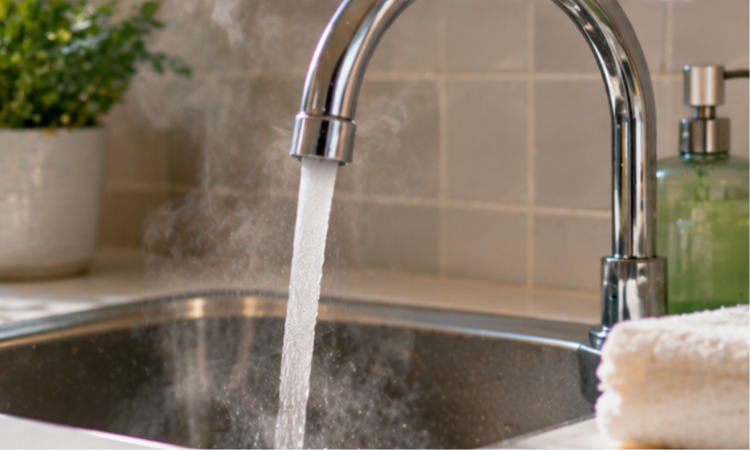
The biggest reason is the temperature of the incoming water. Your water heater does not receive preheated water from the supply line. It has to heat whatever temperature water arrives at your home, and that starting temperature changes throughout the year.
For example, imagine your water heater is set to maintain water at 120°F. If incoming water arrives at 65°F, the heater needs to raise its temperature by 55 degrees. If it arrives at 45°F during winter, the required temperature increase is 75 degrees. That additional heating takes more energy and time.
There is also a difference in how much hot water your shower uses. Your shower valve combines hot and cold water to reach a comfortable temperature. When the incoming cold water is much colder, the valve may need a greater proportion of hot water to produce the same shower temperature. That draws down the tank's stored hot water more quickly.
In West Chester and throughout Chester County, winter temperatures can make this seasonal difference noticeable. Winter is also when we take the most no-hot-water calls in West Chester and Downingtown, because a tank already slowed by sediment tends to give out in the cold. A water heater that was already close to its capacity can struggle to keep up with back-to-back showers and appliance use.
Does Winter Affect Tank and Tankless Water Heaters Differently?
Yes. Both types must deal with colder incoming water, but tank and tankless water heaters respond differently because one stores heated water while the other heats it as it flows.
Storage Tank Water Heaters Need More Recovery Time
A traditional storage water heater keeps a supply of heated water in an insulated tank. When you shower, wash dishes, or run laundry, hot water leaves the tank, and cold replacement water enters. The heating system then works to bring that water back up to its target temperature.
In winter, the larger temperature difference can extend the recovery time. If several people shower one after another, the next person may use hot water before the tank has fully reheated. This is why a 40- or 50-gallon tank may feel less capable during a cold stretch even when its capacity has not changed.
Tankless Water Heaters Have to Handle a Greater Temperature Rise
A tankless water heater does not store a large volume of hot water. It heats water as it passes through the unit. Its ability to deliver hot water continuously depends on the incoming water temperature, the unit's heating capacity, and the flow rate.
When incoming water is colder, a tankless water heater must work harder to raise it to the selected temperature. Depending on the unit's capacity and operating conditions, it may reduce the flow rate to maintain the desired output temperature. If multiple showers or fixtures are running simultaneously, you may notice less available hot water flow during winter.
If your tankless system regularly struggles to keep up, have its capacity, gas supply, and maintenance history checked before you consider replacing it. Sometimes the answer is a different water heater for your Chester County home, sized to how much hot water your household uses at once.
What Water Heater Problems Can Make the Shortage Worse?
Sediment, a failed heating element or weak burner, a broken dip tube, a faulty thermostat, and an undersized tank can all cut your hot water short, and winter makes each one easier to notice. If your system takes longer to recover, produces inconsistent temperatures, or runs out of hot water much sooner than before, one of these components may be responsible.
Sediment Buildup Reduces Heating Efficiency
Minerals in the water can settle at the bottom of a storage tank and gradually form a layer of sediment. This buildup interferes with heat transfer from the burner or heating elements, making the heater work longer to warm the water. Rumbling or popping sounds during heating usually mean sediment is building up. Chester County's hard water lays this layer down faster, which is why we suggest flushing the tank once a year.
A Failed Heating Element or Weak Burner Slows Recovery
Electric water heaters rely on heating elements to warm stored water, while gas models use a burner. If an element fails or a burner cannot produce enough heat, the tank may take longer to recover after use. You may notice shorter showers even when the incoming water temperature is not unusually cold.
A Damaged Dip Tube Allows Cold Water to Mix With Hot Water
The dip tube carries incoming cold water toward the bottom of a storage tank so it can be heated before reaching the outlet. If the tube cracks or breaks, cold water can mix with hot water near the top. This can cause the shower to turn lukewarm much sooner than expected.
A Faulty Thermostat Can Limit Water Temperature
The thermostat controls when a water heater heats the water and when it stops. If it malfunctions, the system may shut off before reaching the intended temperature or provide inconsistent heating. You might notice that the water never gets hot enough, even after the heater has had plenty of time to recover.
An Undersized Water Heater Cannot Meet Household Demand
A water heater that was adequate for a smaller household may struggle after additional people move in or hot-water use increases. Back-to-back showers, laundry, and dishwashing can drain a storage tank faster than it recovers. Winter makes this limitation more noticeable because colder incoming water requires more heating.
How Can You Tell Whether Winter or a Water Heater Fault Is the Cause?
If the shortage started with the first cold stretch and stays about the same, it's winter. If it happens all year, keeps getting worse, or comes with noise, a leak, or lukewarm water after recovery, it's the water heater.
| What you notice | Possible cause | What to consider |
|---|---|---|
| Hot water runs out sooner only during cold weather | Colder incoming water | Seasonal performance change |
| Water stays lukewarm even after recovery | Heating or control problem | Professional diagnosis |
| Tank makes popping or rumbling sounds | Sediment buildup | Maintenance or inspection |
| Water turns lukewarm within minutes | Damaged dip tube | Component inspection |
| Recovery is slow throughout the year | Failed element or weak burner | Heating system repair |
| Hot water cannot keep up with several fixtures | Insufficient system capacity | Demand and sizing review |
| Tankless unit struggles when multiple taps run | Flow or heating capacity limitation | Equipment assessment |
When the pattern points to the water heater rather than the season, arrange an inspection before the supply drops any further.
What Can You Do at Home to Improve Winter Hot Water?
You cannot control the temperature of the incoming water, but you can reduce unnecessary demand and heat loss. Start with simple changes that do not require opening the water heater or adjusting gas and electrical components. Penguins enjoy cold water, but your family's morning showers shouldn't have to.
- Space out showers: Give a storage tank time to recover between showers instead of using the entire hot-water supply back to back.
- Avoid running appliances at the same time: Schedule the dishwasher and washing machine outside your household's busiest shower times.
- Insulate accessible hot-water pipes: Proper pipe insulation can reduce heat loss as hot water travels through an unheated basement or other cold area.
- Check for unnecessary hot-water use: Fix dripping hot-water faucets and avoid leaving hot water running when it is not needed.
- Review the thermostat setting: Check the manufacturer's instructions and keep the temperature at a safe setting. The U.S. Department of Energy recommends 120°F to save energy and avoid scalding.
- Track recovery time: Notice how long the heater takes to provide normal hot water again after a typical shower. A significant change from its previous performance is useful information for a technician.
Be cautious about adding an insulating blanket to a water heater. Some newer models are already well insulated, and covering controls, vents, or other components can create safety problems. Follow the manufacturer's instructions before adding insulation.
When Should You Call for Water Heater Repair?
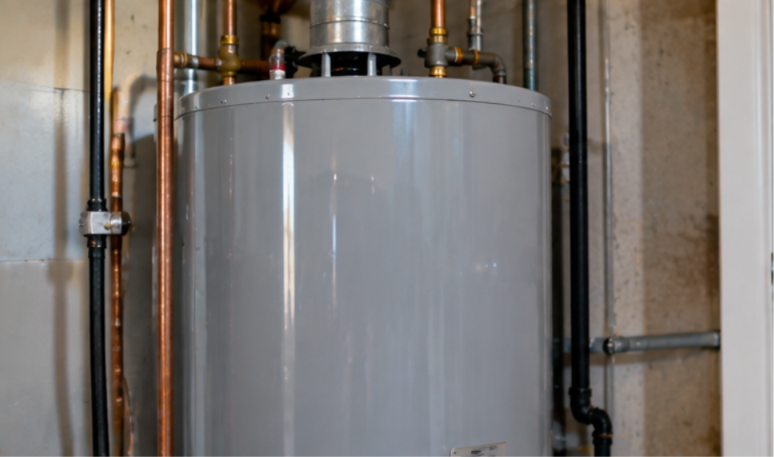
Call for water heater repair when the water stays lukewarm after a full recovery, the supply keeps shrinking, or you see rust-colored water, a leak at the base, or a pilot that won't stay lit. A shorter shower during a cold spell does not, on its own, mean your water heater needs repair.
Three signs that won't wait for warmer weather:
- Rust-colored or discolored hot water: Corrosion inside the tank or the pipes is the usual cause, and it is one of the signs a water heater needs repair that warmer weather won't fix. Have it checked soon, because a corroding tank is on its way to a leak.
- Water around the base of the heater: A loose connection can drip, but water coming from the tank body means the tank is failing. Call promptly, because a tank leak only gets bigger.
- A pilot that won't stay lit: On a gas water heater, this usually traces to a worn thermocouple or a dirty flame sensor. The heater cannot recover at all while the pilot is out, so its controls and combustion parts need a check.
If you smell gas, leave the area and contact your gas utility or emergency services from a safe location. Do not operate electrical switches or attempt to relight the heater. For electrical burning odors, shut off power only if it is safe to do so and arrange professional service.
How Does a Technician Diagnose a Water Heater That Runs Out of Hot Water?
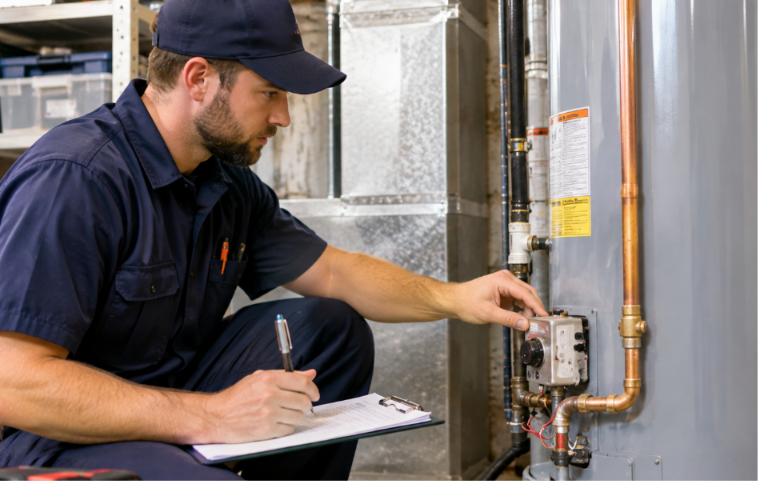
A useful diagnosis starts with understanding when the shortage happens and how the heater behaves between uses. The technician should identify whether the problem is related to winter demand, a mechanical fault, sediment, or equipment capacity before recommending a repair or replacement.
For a storage tank, the inspection may include checking the thermostat, heating elements or burner, dip tube, sediment condition, and recovery performance. The technician may also inspect the anode rod, temperature and pressure relief valve, and venting on applicable gas models.
For a tankless system, the technician may review error codes, flow rate, temperature rise, heat exchanger condition, ignition, and the gas supply where applicable. Mineral scale can restrict heat transfer in tankless equipment, so maintenance history matters too.
Household demand is part of the diagnosis. The number of people in the home, simultaneous showers, appliance use, and the type of fixtures all affect the amount of hot water required. A new system should be sized to how your household uses hot water, not to the size of the old unit.
Why Choose Precision Air Heating and Cooling for Water Heater Service in West Chester?
When your hot water runs out faster in winter, the right fix depends on what is happening inside the water heater and how your household uses hot water. Precision Air Heating and Cooling has served homeowners in West Chester and Southeastern Pennsylvania since 1993. Our locally owned company works across Chester, Delaware, and Montgomery counties, with our own employees handling service rather than subcontractors.
Our technicians work on traditional tank and tankless water heaters, including gas, propane, and electric models. We diagnose the cause before recommending a repair, show you what has failed, and provide written pricing before work begins.
We can help with:
- Water heater repair when a heating element, burner, thermostat, or other component is not working properly.
- Water heater maintenance to address sediment, inspect the anode rod, and check important safety components.
- Water heater installation and replacement when your existing unit no longer meets your household's needs.
- Tankless water heater installation if you are considering an on-demand system for your home.
Whether you are dealing with a slower-recovering tank in an older West Chester home or a tankless unit that struggles during simultaneous showers, start with a proper assessment. Call Precision Air Heating and Cooling at (484) 690-4328, and the Penguin Patrol will find out whether it's the season or the heater.
Frequently Asked Questions
Is it normal for hot water to run out faster in winter?
Yes, it's normal for hot water to run out faster in winter, because colder incoming water takes more energy to heat and a tank needs longer to recover. If the change started with the cold weather and holds steady, it's seasonal. If it keeps getting worse, have it inspected.
Should I turn up my water heater temperature in winter?
Do not automatically raise the temperature to compensate for shorter showers. A setting around 120°F is common for household use and helps reduce scald risk. If your water remains lukewarm at the normal setting, have the thermostat and heating components checked before making adjustments.
Does cold weather affect tankless water heaters?
Yes, cold weather affects tankless water heaters, because colder winter water needs a bigger temperature rise. That can lower how much hot water a model delivers at once, so two showers running together may run cooler. Sizing it to your household and descaling it keep it on pace.
Can sediment make my water heater run out of hot water faster?
Yes, sediment can make your water heater run out of hot water faster, because minerals settle on the bottom of the tank and slow the heat getting into the water. Chester County's hard water speeds this up. Rumbling or popping plus shorter showers means the tank needs a flush.
When should I replace my water heater instead of repairing it?
Replacement may make more sense when the tank is leaking from its body, has significant corrosion, or needs repeated costly repairs. Age, repair history, efficiency, and household demand should all factor into the decision. A technician can compare repair and replacement options before you commit.
Owner & President of Precision Air Heating & Cooling, the independent, family-owned company that has served West Chester and Chester County homes since 1993.