
Water Heater Relief Valve Leaking? What It Means and When It's Dangerous
 Eric Light October 16, 2026 10 min read
A slow drip from the relief valve's discharge pipe after a shower or a load of laundry usually means pressure is spiking while the tank reheats, most often from thermal expansion or high water pressure. A drip that never stops, water that comes out hot or forceful, or a tank that seems to be overheating is the dangerous version, and it needs a call right away.
A leaking water heater relief valve should never be ignored, and its discharge pipe must never be capped or plugged. The valve is a safety device designed to release water when temperature or pressure climbs too high. Replacing the valve is the quick fix, and often the wrong one. If pressure keeps opening it, a new valve drips again for the same reason.
Our technicians test this valve at every water heater tune-up, and when one starts dripping, we check the water pressure, the expansion tank, and the thermostat before we touch the valve itself.
What Makes a Water Heater Relief Valve Leak?
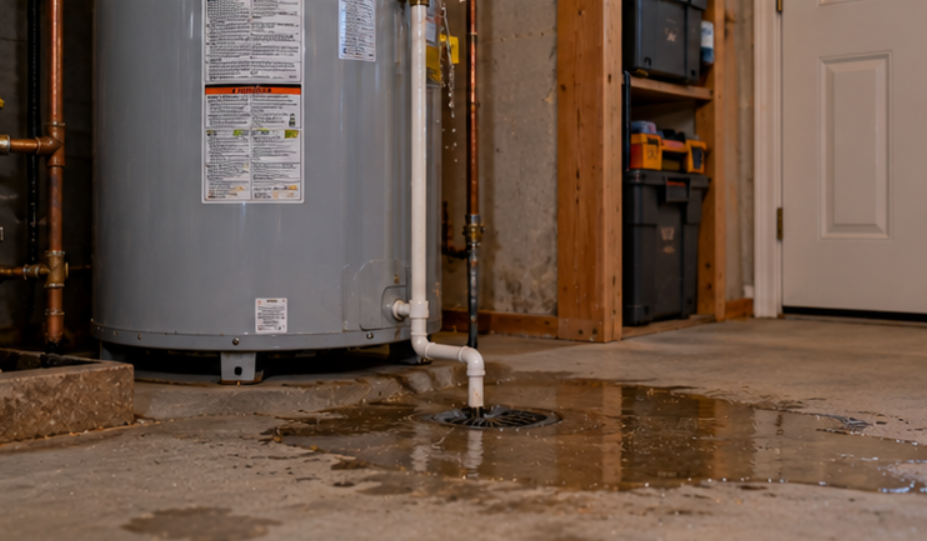
The temperature and pressure relief valve, commonly called the T&P valve, is usually mounted near the top or side of a tank-style water heater. A discharge pipe carries released water away from the tank. If you see water dripping from this pipe, the valve is either responding to pressure or heat that climbed too high, or it no longer seals properly.
Many residential T&P valves are rated to open at approximately 150 psi or 210°F, but the correct ratings depend on the water heater and valve specifications. These are safety limits, not normal operating targets. A valve that repeatedly discharges needs to be evaluated rather than treated as an ordinary plumbing leak.
What Is Thermal Expansion, and Why Does It Make a Relief Valve Drip?
Water expands as it heats. In a closed plumbing system, a check valve, backflow preventer, or pressure-reducing valve may prevent that expanding water from flowing back toward the municipal supply. As the water heater reheats, pressure can build inside the plumbing system and cause the temperature and pressure relief (T&P) valve to discharge.
A thermal expansion tank helps manage this pressure by using an air chamber separated from the water by a flexible diaphragm or bladder. As water expands, the tank absorbs the additional volume instead of allowing pressure to rise excessively.
| Expansion tank condition | Possible effect |
|---|---|
| No tank where one is required | Pressure may rise during heating |
| Incorrect sizing or pressure setting | Expansion may not be adequately accommodated |
| Damaged internal bladder | The tank may no longer absorb expansion properly |
| Properly functioning tank | Helps control pressure changes during reheating |
If the relief valve repeatedly leaks after showers or heating cycles, thermal expansion is the likeliest cause. A technician can check how your system is set up, measure the water pressure, and test the expansion tank before recommending a repair. Replacing the relief valve alone may not stop the leak if the underlying pressure issue remains.
How Can You Identify the Cause of a Leaking Relief Valve?
The timing, frequency, and amount of water coming from a relief valve narrow down the cause, but they cannot confirm it on their own. A technician diagnosing a leaking water heater relief valve checks five things, in roughly this order.
Water Heater Temperature Settings
A thermostat set too high can increase scalding risk and contribute to excessive water temperature. The U.S. Consumer Product Safety Commission recommends 120°F for many residential water heaters to help reduce the risk of tap-water burns.
Even at a normal setting, a faulty thermostat or control can cause overheating. Unexpectedly scalding water or substantial discharge from the relief valve warrants prompt professional attention.
Excessive Household Water Pressure
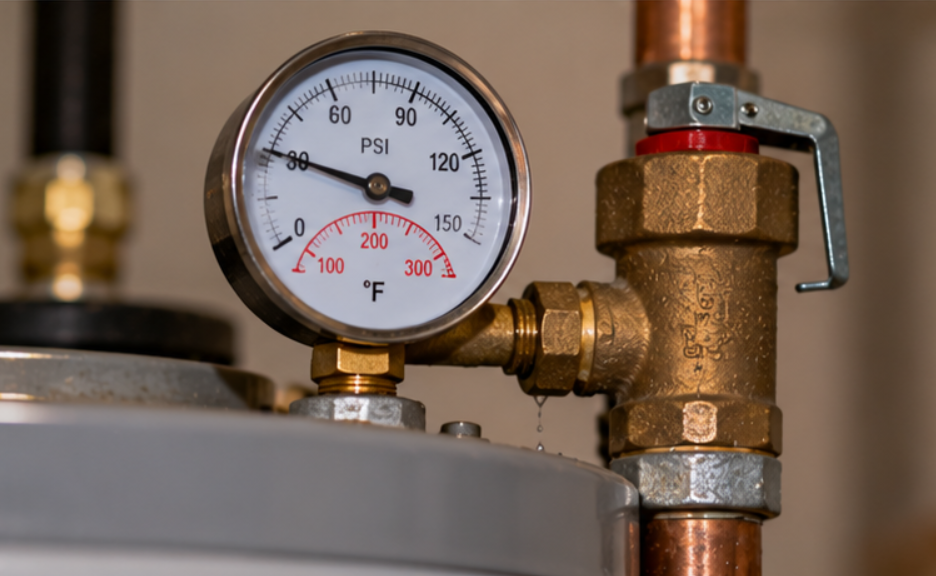
High household water pressure can stress plumbing fixtures, appliances, and the water heater. Residential pressure is generally recommended to remain at or below 80 psi, while approximately 50–60 psi is a common target range.
Pressure can also rise during water-heating cycles, so a single reading may not reveal the full problem. A technician can measure the pressure and determine whether a pressure-regulating device or another correction is needed.
Thermal Expansion Tank Problems
If the expansion tank loses its air charge or its internal bladder fails, it fills with water and stops absorbing anything, so pressure climbs every time the heater reheats. You cannot tell from the outside, because a failed tank looks the same as a working one. A technician checks the air charge and the sizing to decide whether it needs adjusting or replacing.
A Worn or Damaged Relief Valve
Mineral deposits, debris, age, or internal wear can prevent the relief valve from sealing properly. This causes a steady drip even when water temperature and pressure are normal.
Replacing the valve without checking the system's operating conditions often does not solve the problem. A technician should first confirm whether the valve itself has failed or whether pressure or overheating keeps forcing it open.
Recurring Discharge During Heating Cycles
Water that repeatedly appears after the heater reheats may indicate thermal expansion or another pressure-related issue. A continuous drip can also point to a valve that no longer seals correctly, while a steady or forceful discharge requires prompt attention.
Note when the leak occurs and whether the amount changes, but do not touch the hot discharge pipe or operate the valve yourself. If the cause is still unclear, our team can track down why the valve keeps opening before anyone replaces a part.
When Is a Leaking Water Heater Relief Valve Dangerous?
A small drip does not automatically mean the water heater is about to fail, but it can signal a condition that needs correction. The risk increases when the discharge is continuous, the water is unusually hot, or the system shows signs of overheating.
If the valve releases a large amount of hot water, the tank appears to be overheating, or you notice a significant leak, keep people away from the discharge and call right away. Shut off the heater only if you can do so safely and according to the manufacturer's instructions.
Continuous or Forceful Discharge
A valve that runs without stopping, or pushes water out hard, is releasing pressure or heat the tank cannot hold. This is the most urgent sign on the list. Keep people clear of the pipe and call right away.
Scalding Water at the Tap
Water that suddenly comes out much hotter than usual means the thermostat or control may have stopped regulating the temperature. The relief valve exists to catch exactly this, so treat it as urgent. Stop using the hot water and call right away.
Rumbling or Popping From the Tank
Rumbling usually comes from sediment settling on the bottom of the tank, which traps heat and makes the burner or element work harder. On its own, it is not an emergency. Paired with a dripping relief valve, it is worth a visit within the week.
Water Near Electrical Equipment
Water spreading toward an outlet, a power cord, or an electric water heater's wiring adds a shock risk on top of the property damage. Do not step into standing water or reach for anything electrical. Call right away.
A Blocked or Capped Discharge Pipe
If the discharge pipe is capped, kinked, or plugged, the valve cannot release pressure the way it was designed to. It is dangerous even when nothing is leaking, because the safety valve has nowhere to send the water. Never cap, plug, or restrict the T&P valve or its discharge pipe.
What Can You Safely Check Before Booking a Water Heater Repair?
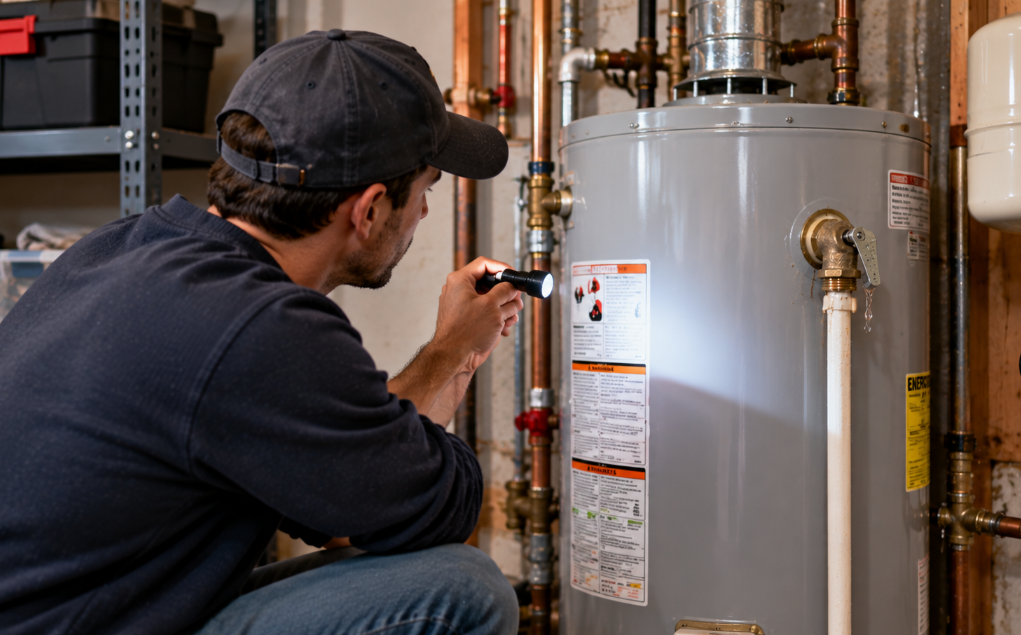
You can gather useful information without dismantling the water heater or handling its safety components. Avoid touching the discharge pipe or attempting to operate the relief-valve lever, because released water may be hot enough to cause severe burns.
Before arranging service, note the following:
- Where the water appears: Check whether it comes from the relief-valve discharge pipe, a plumbing connection, or the tank body, which is a different repair sign altogether.
- When the leak occurs: Record whether it appears after hot-water use or seems continuous.
- How much water is present: Note whether you see occasional drops, a small puddle, or a steady flow from a safe distance.
- The water heater's age: If you know when it was installed, share that information with the technician.
- Any unusual symptoms: Mention unexpectedly hot water, rumbling noises, or changes in hot-water availability.
Do not remove the relief valve, open the tank, or attempt to test the expansion tank's internal components yourself. Follow the water heater manufacturer's safety instructions and leave pressure testing and valve diagnosis to a technician.
Leaking Relief Valve in Chester County? We Find What Keeps Opening It
A dripping relief valve is usually doing its job. Something in the system keeps pushing it open. Our technicians measure your water pressure, check the expansion tank and the thermostat, and show you what they found before anyone replaces a part. You get a flat diagnostic fee up front and a written price for the fix before work starts.
Precision Air Heating and Cooling has served West Chester and the rest of Chester County since 1993. If the valve is still dripping, book water heater repair or call (484) 690-4328, and the Penguin Patrol will usually get to you within the week. To have the valve and expansion tank checked every year, ask about water heater maintenance on the same call.
Questions About a Leaking Water Heater Relief Valve
Can I replace a leaking relief valve myself?
We don't recommend it. Replacing a T&P valve involves a pressurized tank, hot water, and a safety-critical component. The leak is also often caused by excessive pressure or thermal expansion rather than a faulty valve, so have the underlying cause assessed before deciding on a replacement.
Is it safe to use a water heater while the relief valve is dripping?
For a slow, occasional drip, usually yes while you arrange a visit. Stop using it if the discharge is continuous, the water is scalding, or the tank seems to be overheating. Never block the discharge pipe.
Why does the relief valve leak after a shower?
After a shower, the water heater reheats the incoming cold water. In a closed plumbing system, the resulting thermal expansion can raise pressure and cause the valve to release water. If the leak repeatedly follows heating cycles, have the expansion tank and system pressure checked.
What happens if I cap the discharge pipe to stop the leak?
Never cap or plug the discharge pipe. It provides a route for water to escape if the valve opens because of excessive temperature or pressure. Blocking it disables the water heater's safety mechanism and turns a dripping valve into a safety hazard. Have the cause of the discharge corrected instead.
Should I test the relief valve myself?
Do not operate the valve's test lever unless the manufacturer's instructions specifically direct you to do so and you understand the scalding hazard. Operating an older valve can also cause it to continue dripping if it fails to reseat. A qualified technician can assess its condition and test it safely.
Owner & President of Precision Air Heating & Cooling, the independent, family-owned company that has served West Chester and Chester County homes since 1993.