Furnace Stopped Working After a New Thermostat? Here's What Might Have Gone Wrong
 Eric Light October 16, 2026 9 min read
You install a new thermostat expecting better temperature control, turn the heat on, and wait for the familiar sound of your furnace starting up. Instead, nothing happens. The display may be working perfectly, but your home keeps getting colder, leaving you wondering whether a wire is misplaced, the thermostat is incompatible, or the furnace itself has developed a problem.
If your furnace stopped working immediately after a thermostat replacement, start by checking the installation rather than assuming the furnace has failed. Incorrect terminal connections, missing power requirements for a smart thermostat, a blown low-voltage fuse, or an incompatible system setting can all interrupt heating. Before inspecting any wiring, turn off power to the HVAC system.
How Can a New Thermostat Stop a Working Furnace?
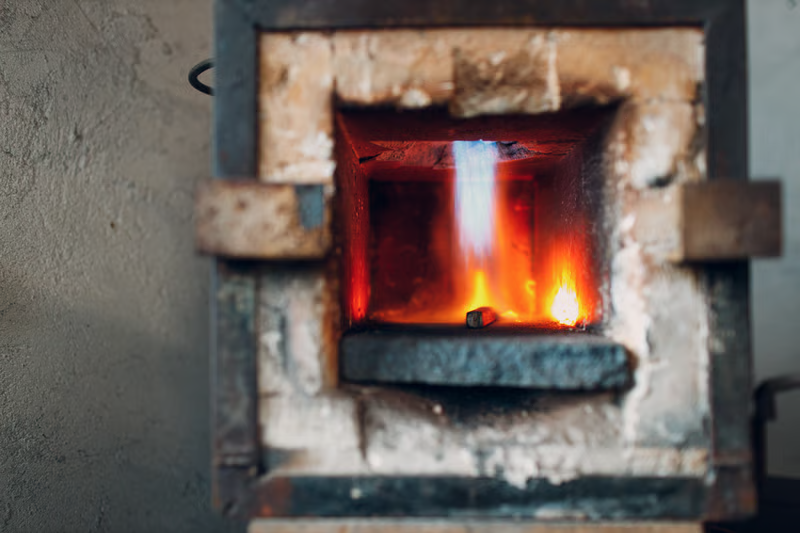
The thermostat is not the heat. It is a low-voltage switch that tells the furnace when to run. It sits on a 24-volt control circuit, and each wire landing on it carries one simple instruction: call for heat, call for the fan, call for cooling. Disturb those connections and the furnace stops getting the message, even though the furnace itself is untouched.
So when heat disappears right after an install, the fault almost always rode in with the new device. The burner, the blower and the gas valve are the same ones that worked an hour ago. What changed is the handful of thin wires behind the wall plate and the settings on the screen.
That means you are troubleshooting a swap, not a breakdown, and each likely mistake takes a few minutes to check.
Which Thermostat Wiring Mistakes Stop a Furnace Most Often?
Four mistakes cause most no-heat calls after a swap, and the first one is the most common.
A Wire Landed on the Wrong Terminal
The heat call travels on the W terminal. If that wire ended up on Y, G or anywhere else, the thermostat can power on and look fine while never telling the furnace to light. You will often get the fan but no burners, or nothing at all. This is the most common swap error and the easiest to confirm against a photo of the old wiring.
A Wire Slipped Out or Never Seated
Thermostat wire is thin, and a strand that was not pushed fully into the terminal can back out when you press the device onto the plate. The connection looks made but carries no signal. Tug each wire gently. If one lifts free with almost no resistance, it never seated, and reseating it may restore heat on the spot.
The Thermostat Is Set to Heat Pump on a Gas Furnace
New thermostats ask for the system type during setup. Choose heat pump on a gas furnace and the heat call routes to the wrong terminal, so the burners never fire. The screen works, the fan may run, and nothing heats. This is a settings fix, not a wiring one, and costs nothing to correct.
The Old Wire Colors Didn't Match the New Labels
Wire color is a convention, not a rule. The previous installer may have used red for something other than R. If you matched color to new label instead of tracing where each wire came off, a connection can be wrong despite looking tidy. The photo you took before removing the old unit is what settles this.
If one of these describes your swap, you likely have a five-minute fix ahead rather than a repair bill.
Why Does a Smart Thermostat Quit Hours After the Install?
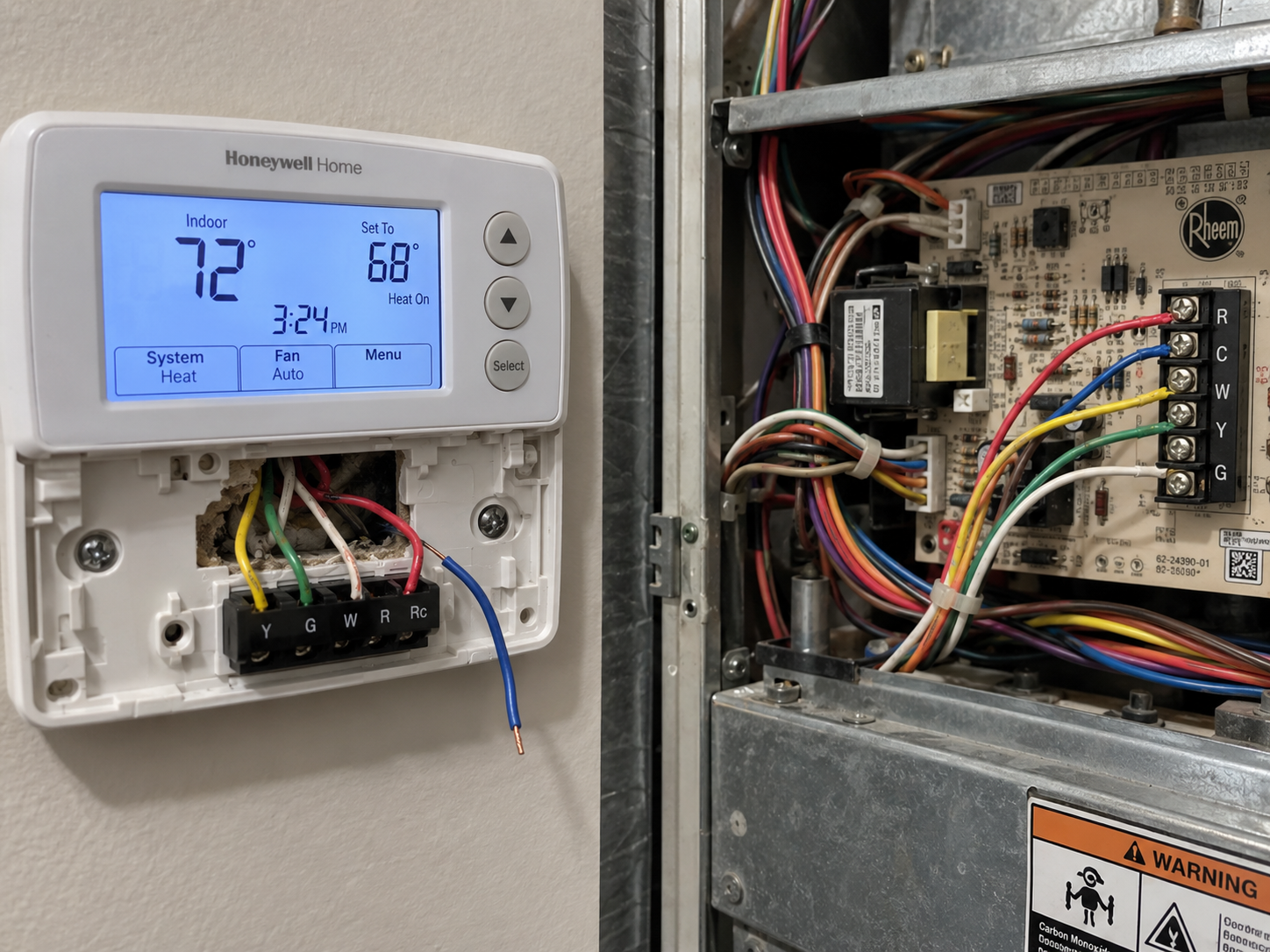
Usually, a thermostat stops working hours after it got installed because it has run out of power. A smart thermostat needs a C-wire because it draws continuous power to run its screen, Wi-Fi, and processor, and the C-wire is what delivers a steady 24-volt supply.
The older R and W wires only carry a signal when heat is called. An old mechanical thermostat needed almost no power, so it never missed the C-wire. A smart model does every minute it is on.
Much of the older housing stock here was wired for simple thermostats with only two or three conductors and no spare for a C-wire. Drop a smart device onto that cable, and it may run on its battery for a while.
The trouble starts the moment it cannot pull continuous power: it drops the call for heat. That is why the symptom often shows up as intermittent no-heat rather than a dead screen.
The signs that point to a power shortage rather than a terminal error tend to look like this:
- A screen that worked at install and later went dark or unresponsive
- Heat that ran once after the swap, then stopped on its own
- No-heat that comes and goes rather than staying dead
- A thermostat that keeps asking to recharge or reconnect
If your furnace worked for an hour after the swap and then quit, suspect this before anything else. An add-a-wire adapter or a dedicated C-wire run usually solves it, and we fit either when we install a thermostat.
Why Won't the Furnace Respond After a Thermostat Swap?
A furnace that is fully unresponsive after a swap, even with correct wiring, usually has a blown low-voltage fuse on the control board. During the install, a bare thermostat wire touched the furnace cabinet or crossed R and C, and that short sacrificed the fuse to protect the board. Nothing on the low-voltage circuit works until it is replaced.
Most control boards protect that circuit with a small automotive-style blade fuse, commonly in the 3 to 5 amp range. On a single-stage system, meaning a furnace with one fixed heat output and a simple R, W, G, C wiring map, the board is easy to inspect once the panel is off. A blown fuse often shows a broken metal strip through its clear plastic body.
Replacing the fuse without finding the short just blows the new one. The wire that caused it has to be located and corrected first. If the wiring looks right and the fuse is intact, the problem is somewhere else, and guessing at parts gets expensive fast.
Which Symptom Points to Which Thermostat Problem?
A dark screen, a fan running without heat, and heat that starts and then stops each point to a different wiring, power, or setup issue.
| What You Observe | Possible Cause | Why It Matters | First Check |
|---|---|---|---|
| Fan runs, but no heat | Incorrect W-wire connection | The furnace may not receive the heating signal | Compare the wiring with the thermostat's installation diagram |
| Worked initially, then stopped | Missing C-wire or power issue | A smart thermostat may lose reliable power | Check the manufacturer's wiring requirements |
| Thermostat screen is blank | Blown low-voltage fuse or lost power | The thermostat may not receive power from the HVAC system | Check the display batteries and system power |
| Screen works, but heat won't start | Incorrect system configuration | The thermostat may be configured for the wrong heating system | Verify the system type in the setup menu |
These symptoms are clues, not definitive diagnoses. For example, a blank display can have several causes, and incorrect wiring may damage a low-voltage fuse. Turn off power before inspecting any wiring, and avoid opening electrical compartments or handling furnace components if you're unsure how to do so safely.
What Can You Safely Check After a Thermostat Swap?
There is a safe order to this, and it starts with power. Shut the furnace off at its service switch before you touch any wiring, every time.
Here is the sequence that is safe for a homeowner:
- Cut power at the furnace switch: Flip off the service switch so a slipped wire cannot short the board.
- Check the thermostat system setting: Confirm it is set to gas or conventional, not heat pump, and to heat above room temperature.
- Compare every wire to your photo: Verify each conductor is on the terminal it came off of, not matched by color.
- Tug each wire gently: Reseat any that lifts free, since a loose strand carries no signal.
- Inspect the control board fuse: Look for a broken metal strip through the clear blade fuse.
Furnace Still Not Heating After a Thermostat Swap? We Trace the Wiring Before We Replace Anything
If the wiring matches your photo, the system type is right, and the fuse is intact, the next step is someone tracing the low-voltage circuit instead of guessing at parts. Our technicians check every terminal and the fuse, and you hear the flat diagnostic fee when you book. If the new thermostat needs a C-wire, we run one or fit an adapter and tell you the cost before we start.
Precision Air Heating and Cooling has handled furnace repair across West Chester and Chester County since 1993. Call (484) 690-4328 and the Penguin Patrol will trace it from the wall plate back to the board.
If you would rather hand the whole job over, we will install and set up the thermostat with a model that matches your system and that you will be comfortable using.
Questions About a Furnace That Stopped After a Thermostat Swap
Why did my furnace stop heating immediately after I replaced the thermostat?
Most often the heat wire is not on the W terminal, or the thermostat was set up as a heat pump instead of a gas furnace. Turn off power at the furnace switch, then compare every wire against your photo of the old thermostat.
Can a new thermostat cause my furnace's control board fuse to blow?
Yes. If a thermostat wire touches another terminal or a metal surface during installation, it can short the low-voltage circuit and blow the furnace's control board fuse. A blown fuse may leave the thermostat blank or prevent the furnace from responding. The short must be identified and corrected before replacing the fuse, or the replacement may blow again.
Why does my thermostat turn on but my furnace won't start?
A working thermostat display doesn't mean the furnace is receiving a proper heating signal. The thermostat may have power from batteries while the heating wire is incorrectly connected, or its settings may not match your HVAC system. Verify the system type and wiring diagram before assuming the furnace itself needs repair.
Why did my furnace work after the thermostat installation but stop later?
A smart thermostat losing power is the most likely cause, usually because there is no C-wire. A loose wire or the wrong system setting can do the same thing, so check those too.
When should I call an HVAC technician after replacing a thermostat?
Call an HVAC technician if the furnace still won't start after you verify the thermostat's settings and compatibility, or if a fuse blows, a breaker trips, or you notice damaged wiring. A technician can test the low-voltage circuit, thermostat connections, and furnace controls to find the fault. Avoid repeated fuse replacements or continued wiring changes that could cause further damage.
Owner & President of Precision Air Heating & Cooling, the independent, family-owned company that has served West Chester and Chester County homes since 1993.