
Replacing an HVAC System in a Historic West Chester Home: What Homeowners Need to Know
 Eric Light August 17, 2026 8 min read
West Chester is full of beautiful older homes, from downtown Victorians to century-old farmhouses in the surrounding countryside. Replacing the HVAC system in one of these homes is rarely a simple swap. Original layouts, aging ductwork, tight mechanical spaces, and the need to protect the home's character all make the project more involved than a modern HVAC installation in West Chester.
That complexity is exactly why the contractor matters more than the equipment. A crew experienced only with new construction can overlook the quirks that define older properties, leaving you with uneven comfort and wasted energy. A replacement in a historic home succeeds when someone plans carefully around what already exists rather than forcing a standard system into it.
This guide explains what homeowners need to know before replacing an HVAC system in a historic West Chester home. It covers why older homes require more planning, the challenges of original ductwork design, how to balance preservation with modern efficiency, and why a proper load calculation protects a $7,000 to $18,000 investment in a home you love.
Why Historic Homes Require More Planning
Why can't you size an older home by square footage alone?
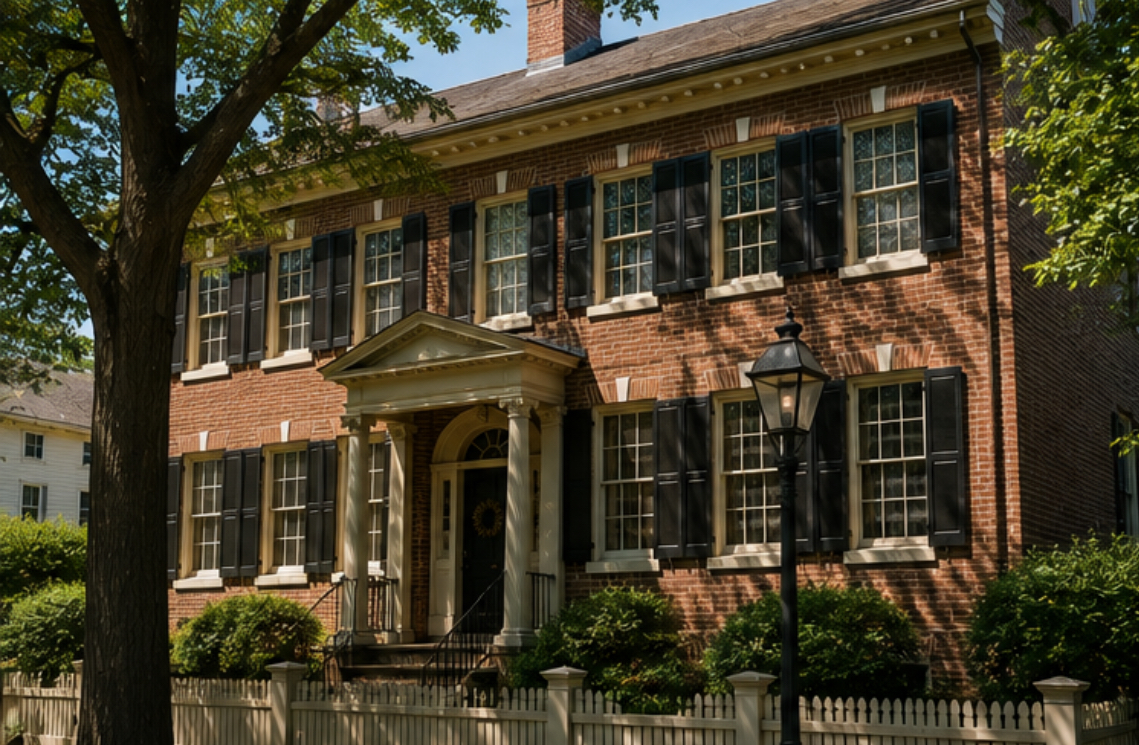
Older West Chester homes were often built long before central heating and cooling existed, so their systems were added later and adapted over the decades. Walls may lack insulation, ceilings can be high, and floor plans rarely follow modern airflow logic. Each of these factors changes how the home heats and cools, and none of them show up in square footage alone.
What should the contractor study before recommending equipment?
A thoughtful replacement starts with study, not equipment selection. A good contractor walks the home, notes additions and past renovations, and identifies where earlier HVAC work created problems. This planning stage prevents the common mistake of dropping an oversized system into an old house, which almost always makes comfort and humidity worse rather than better.
Before choosing between air conditioning replacement, heating installation, a heat pump upgrade, or a ductless mini-split, the home itself has to be understood first.
The Challenge of Original Ductwork and Airflow
Could old ductwork ruin a new HVAC system?
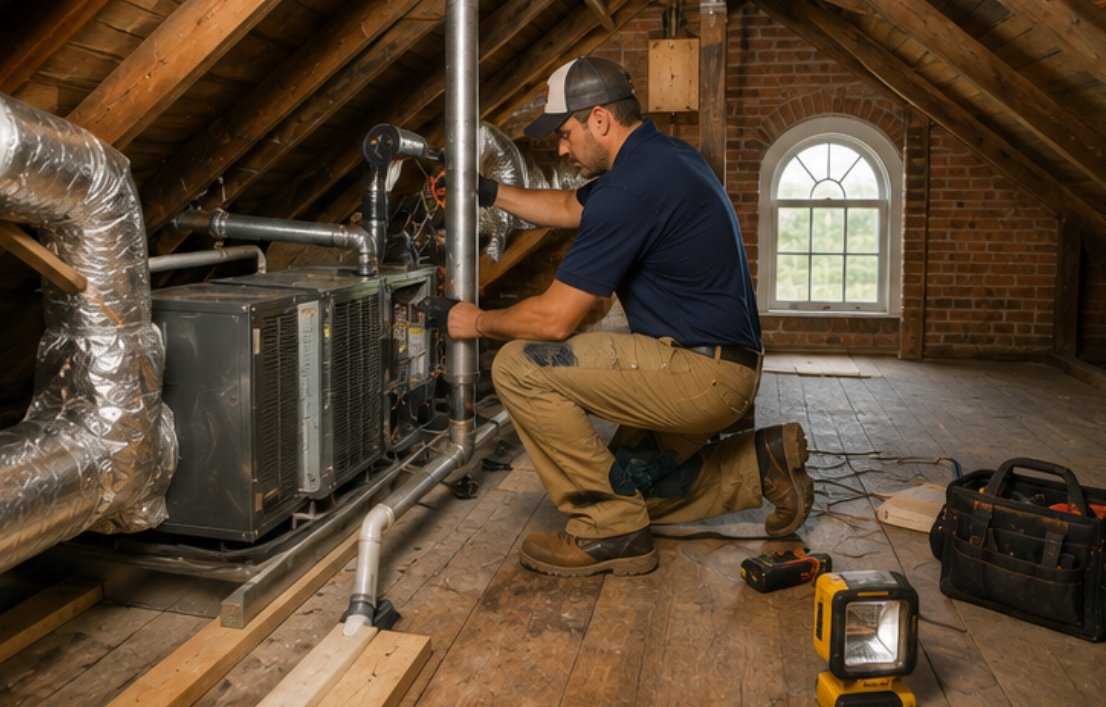
Ductwork is often the biggest hurdle in a historic home. Ducts may have been squeezed into closets, chases, or former chimneys, and after decades they frequently leak, sag, or lack insulation. ENERGY STAR notes that typical duct systems can lose about 20% to 30% of the air moving through them because of leaks, holes, and poor connections, and older homes often sit at the worse end of that range.
Undersized or poorly routed ducts also create high static pressure, which chokes airflow and leaves upstairs rooms hot and back rooms cold. Before installing new equipment, a careful contractor evaluates the existing ducts, measures static pressure, and decides what to seal, resize, or reroute.
What should be checked before new equipment is installed?
A historic-home replacement should include a close look at the duct path, return air, supply runs, insulation, and visible leakage. If the ductwork is the real problem, the right answer may include ductwork design and installation before or alongside the new system. Ignoring this step guarantees the same comfort complaints will survive the upgrade you paid for.
Balancing Preservation With Modern Efficiency
Can you upgrade comfort without damaging historic details?
Many historic homeowners worry that modern efficiency means tearing into original plaster, trim, or hardwood floors. Good planning keeps that disruption to a minimum. The National Park Service guidance on historic HVAC work emphasizes planning system changes around the building's historic character, not treating preservation as an afterthought.
High-efficiency systems, smart duct routing, and in some cases compact or ductless equipment let you gain modern comfort while preserving the character that makes the home special in the first place.
Which HVAC options work best in older homes?
The goal is a system that respects the house and still meets today's SEER2 efficiency standards. Sometimes that means a creative duct solution, sometimes zoning systems for uneven floors, sometimes a ductless mini-split installation for a finished third floor, and sometimes a high-efficiency furnace or heating system sized precisely for the space. The right approach protects both your comfort and your home's history at the same time.
Why Load Calculations Matter Even More in Older Homes
What is a Manual J load calculation?
In a historic home, guessing the system size is especially risky, because insulation, windows, and additions vary so widely from room to room. A proper ACCA Manual J load calculation measures the home's true heating and cooling needs instead of copying the old unit. That accuracy helps prevent the short cycling, poor humidity control, and uneven comfort that often show up when equipment is oversized.
What happens if the new HVAC system is too large?
Right-sizing protects the equipment and your budget over time. A system matched to the home runs longer, gentler cycles and uses less energy than one that constantly starts and stops. In an older house with irregular loads, that precision is the difference between even, comfortable rooms and a new system that still cannot keep up.
This matters whether you are planning AC installation and replacement, a heat pump installation, or a new heating system.
How Precision Air Approaches Replacement in Historic Homes
How does Precision Air plan an older-home HVAC replacement?
Precision Air treats each historic replacement as its own project rather than a standard install. Our technicians assess the home, evaluate the existing ductwork, run a Manual J load calculation, and design a system that fits the space while preserving its character. We plan the important details before we ever recommend a single piece of equipment.
| Step in an older-home replacement | Why it matters |
|---|---|
| Full home assessment | Identifies additions, insulation gaps, and past HVAC shortcuts. |
| Ductwork evaluation | Finds leaks, restrictions, and undersized returns before install. |
| Manual J load calculation | Sizes equipment to the home's real load, not the old unit. |
| Preservation-minded design | Minimizes disruption to plaster, trim, and original features. |
| Commissioning and testing | Verifies airflow and performance once the system is running. |
This measured process is why homeowners across Chester County trust Precision Air with their most challenging properties. We would rather invest extra planning upfront than leave you with a system that fights the house. Careful design is what turns a difficult older home into a comfortable, efficient one for many years to come.
For some historic homes, that plan points toward a central air conditioning replacement. For others, the smarter answer may be a heat pump upgrade, a ductless mini-split, or ductwork improvements before equipment is replaced.
Questions to Ask Before Replacing HVAC in a Historic Home
Will you evaluate the existing ductwork before quoting equipment?
Ask whether the contractor inspects and tests your ducts before quoting equipment. In an older home, the ducts are often the real source of comfort problems. A contractor who plans to reuse them without measuring static pressure or checking for leaks has not truly diagnosed your home, and the new system will likely inherit the same issues.
Do you perform a Manual J load calculation?
Confirm that sizing comes from an ACCA Manual J calculation rather than the old system's tonnage. Historic homes rarely match modern sizing assumptions, so a real calculation is essential. A contractor who quotes a size within minutes of arriving is guessing, and in an irregular older home that guess almost always leads to an oversized, uncomfortable result.
How will you protect the home's character?
Ask how the crew plans to route equipment and ducts with minimal disruption to original features. Experienced contractors offer creative solutions, from compact air handlers to ductless zones, that preserve plaster, trim, and floors. A company that only proposes a standard installation may not appreciate what makes your historic West Chester home worth protecting.
Do local historic rules or review steps apply?
Before changing visible exterior equipment, line-set placement, or features that affect a historic property, it is smart to check whether local preservation rules apply. The West Chester Historical Commission is a good starting point for understanding preservation review in the borough. Your HVAC contractor should be willing to plan around those requirements, not treat them as an afterthought.
Ready to Replace HVAC in a Historic West Chester Home?
A historic home should not be treated like a standard install. The equipment matters, but the planning matters more. Before we recommend a system, Precision Air Heating & Cooling looks at the home itself: the ductwork, insulation, room layout, additions, mechanical space, airflow, and the details that make the property worth preserving.
If your older home has uneven rooms, rising energy bills, aging equipment, or ductwork that never worked quite right, start with a careful replacement conversation instead of a quick equipment quote.
Here is where we can help:
- Planning a full air conditioning replacement for an older West Chester home
- Replacing or upgrading a furnace or heating system
- Exploring a heat pump installation for year-round comfort
- Solving hard-to-reach rooms with a ductless mini-split installation
- Fixing airflow problems with ductwork design and installation
- Protecting the new system with the Precision Comfort Club
Call Precision Air today or schedule a visit online. We will walk the home, explain what we find, and help you choose an HVAC replacement plan that protects both your comfort and the character of your historic West Chester home.
Owner & President of Precision Air Heating & Cooling, the independent, family-owned company that has served West Chester and Chester County homes since 1993.