
Which Water Heater Is Best for a Chester County Home?
 Eric Light September 24, 2026 12 min read
A water heater is easy to overlook until it starts affecting your daily routine. Maybe the morning shower turns cold, the tank takes longer to recover, or the unit shows signs of age. If your system is nearing replacement, choosing a replacement before it fails gives you time to compare options for your home instead of rushing.
There is no single best water heater for a Chester County home. The answer comes down to three things: the fuel already running to the house, how much hot water you need in your busiest hour, and what the space around the old unit can physically take.
A conventional gas or electric tank is usually the simplest swap. A tankless or heat pump unit solves a different problem, and a home with a compatible boiler can heat its water off that instead. What follows is how each one behaves in a Chester County house, and how to size whichever you land on.
What Factors Should You Consider When Looking For the Right Water Heater for Your Home?
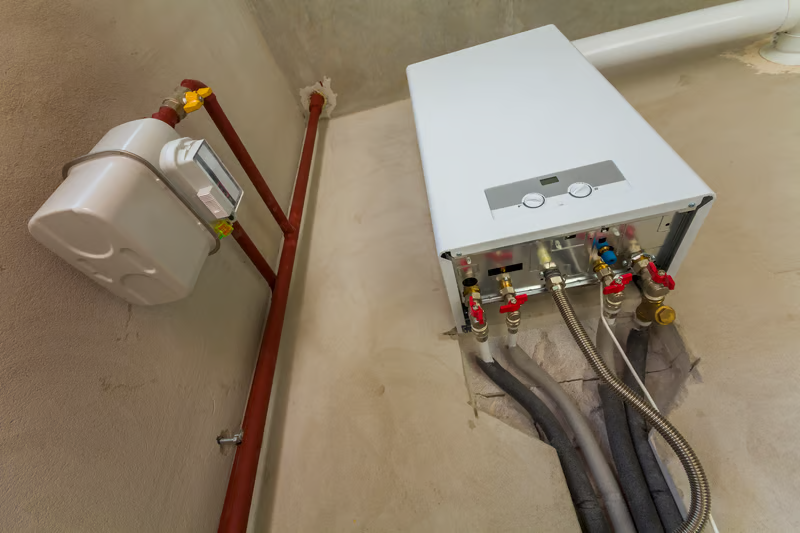
Four things decide what type of water heater you should install in your Chester County home, and they matter in this order.
1. The Fuel Already Running to Your House
Natural gas, propane or all-electric narrows the shortlist before anything else does.
2. Your Busiest Hour, Not Your Household Size
Count the showers, laundry and dishwasher that overlap on your worst morning.
3. The Space Around the Old Unit
Clearance, venting, drainage and electrical supply rule out units that look fine on paper.
4. What It Costs to Run, Not Just to Buy
A cheaper unit today can lose to a pricier one over ten to fifteen years.
What Are the Main Water Heater Options for Chester County Homes?
Most homeowners will be comparing four main equipment categories: conventional storage tanks, tankless water heaters, heat pump water heaters, and indirect water heaters. Within the conventional and tankless categories, the fuel source can be natural gas, propane, or electricity depending on the equipment.
| Water Heater | Best Fit | Main Advantage | Main Consideration |
|---|---|---|---|
| Gas storage tank | Homes with natural gas and steady demand | Familiar equipment and strong recovery | Uses floor space and requires proper venting |
| Electric storage tank | Homes without gas service | Straightforward installation and no combustion vent | Higher operating cost than some alternatives |
| Tankless | Homes wanting continuous hot water or more floor space | No large storage tank and on-demand heating | Flow rate, venting, gas supply, or electrical requirements |
| Heat pump water heater | All-electric homes with suitable space | Uses heat from surrounding air to heat water | Needs adequate air volume, clearance, and appropriate temperatures |
| Indirect water heater | Homes with a compatible boiler | Uses the existing boiler to heat domestic water | Only makes sense when the boiler and system are suitable |
Propane can power certain storage and tankless water heaters when natural gas is unavailable, which is particularly relevant for some rural Chester County properties. It is better to think of propane as a fuel option within the equipment category, rather than as a separate type of water heater.
The installation environment matters just as much as the fuel. A unit that looks ideal on paper may not be appropriate if the basement, mechanical room, electrical service, venting, or existing plumbing cannot support it.
How Do You Match a Water Heater to Your Household's Demand?
Size the heater to the busiest hour in your house, not to the number of people living in it. Tank capacity, recovery rate, tankless flow rate, and incoming water temperature all decide whether the system keeps up when three things run at once.
What Size Tank Does Your Household Need?
A tank is sized for the busiest hour, not the daily average. Keeping it flushed is what protects that recovery rate, which is why water heater maintenance shows up in the sizing conversation at all. A family of four running back-to-back showers and a dishwasher typically needs around a 50-gallon gas tank or a 66-to-80-gallon electric, since electric recovers slower.
Cold winter inlet water in this county lengthens recovery, so a tank that coasted through summer can lag in January. Size for the coldest month and the worst morning, not the easy ones.
How Do You Size a Tankless Unit by Flow Rate?
A tankless unit is rated in gallons per minute, not gallons stored, so you size it by how many fixtures run at once. Two showers and a sink might demand 5 to 7 GPM. The catch is that colder inlet water forces the unit to work harder, dropping its usable flow rate.
A model rated generously in a mild climate can fall short here in winter, so size to the coldest inlet temperature you will see.
How Much Space and Venting Does Each Unit Need?
Much of the county's older housing puts the water heater in an unconditioned basement, which changes what fits. A hybrid heat pump cools and dehumidifies the room it sits in, welcome in a summer basement but a problem in a small cold utility closet where it starves for air.
It generally wants around 700 to 1,000 cubic feet of space or a ducting kit. Tankless frees floor space but needs a clear venting path.
What Does Each Type Cost to Run?
The bill you pay each month often outweighs the price on the box. A hybrid heat pump can cut water-heating energy use by roughly half compared to a plain electric tank, which adds up over 10 to 15 years. The higher sticker price is also the one most often spread over payments, and our financing is there for qualified customers, subject to approval.
Gas is usually cheaper to run than electric resistance, and propane sits between the two. A low running cost, though, does not justify a unit your fuel setup or space cannot support.
Once you know your demand, your space and your fuel, the next step is equipment that can be installed correctly in the house you have. Our water heater installation and replacement work across Chester County starts with the setup already in the basement, because the old unit tells you most of what the new one has to clear.
Which Brands Make the Best Water Heaters?
There is no one brand worth recommending to every homeowner. The better choice follows from the type of heater, your household's hot-water demand, available space, and what makes sense for the home. Once you know you want a 50-gallon gas tank or a hybrid, the brand question gets much simpler, because each maker has a category it does well. Where brands matter most is warranty length and parts availability, since a common unit is easier to service years down the line.
Here is roughly where the major residential names tend to fit:
- Bradford White is sold only through the trade, not the big-box aisle, and it builds a tank that lasts. It is the common pick for a straight gas or electric replacement.
- Rheem covers tanks, tankless and hybrid heat pump models in one lineup, so it is the easy answer when you want to compare all three without changing maker.
- A.O. Smith is strong on residential tanks and heat pump units, and its parts turn up in most supply houses, which shortens a repair years from now.
Whatever you choose, ask whether your installer stocks parts for it. A common unit gets fixed the same week. An unusual one waits on a shipment. Whichever way the type and the household point you, the badge on the front matters less than whether the unit is sized and vented right on the day it goes in.
What Does Installing Each Type of Water Heater Involve?
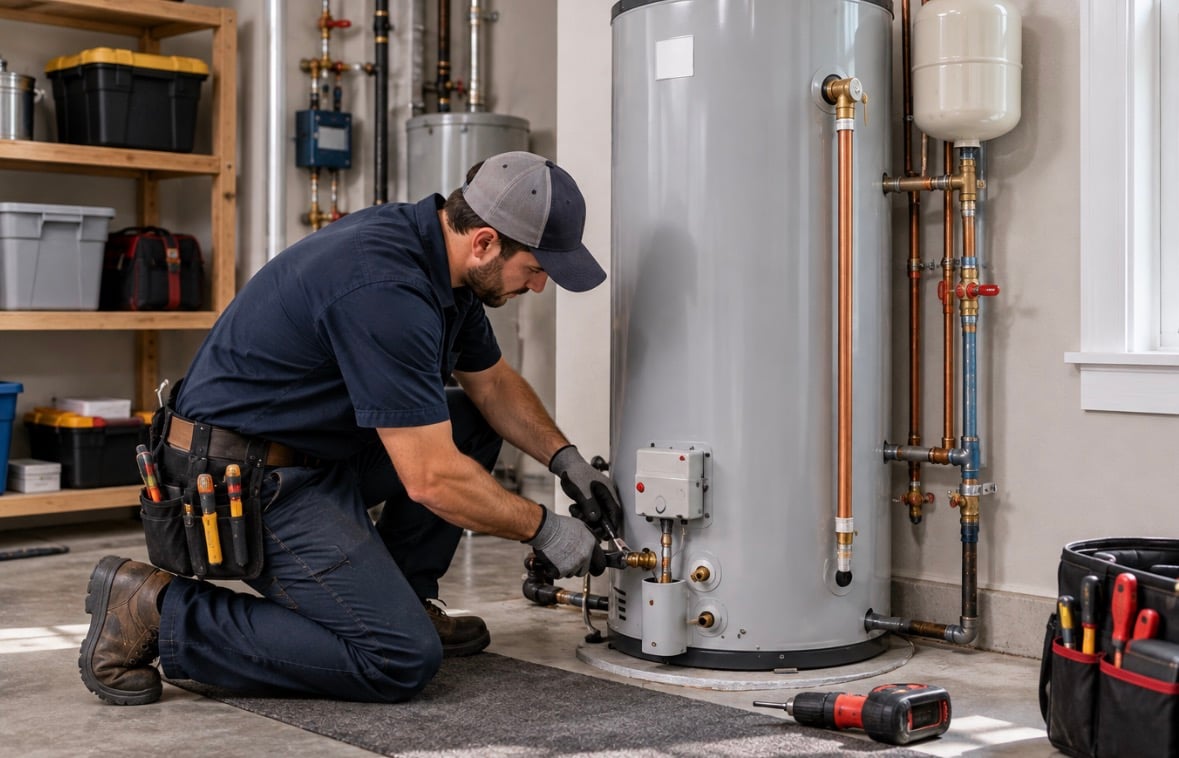
Installation cost swings widely, and the swing is almost entirely about how far the new unit strays from what is already there. A like-for-like swap, replacing a gas tank with a gas tank in the same spot, is the simplest job and the most predictable. The complexity climbs the moment you change fuel or format, because a fuel change drags gas lines, venting, or electrical work along with it.
Precision Air Heating and Cooling has been installing and replacing water heaters here for 33 years, in every fuel setup Chester County has to offer. The fuel question shapes the quote more than anything else on the list. Roughly in order of rising complexity:
- Same tank, same spot, same fuel. This is the baseline job and the cheapest day's work.
- Electric to gas. We run a gas line and add venting, so the cost sits in the plumbing, not the tank.
- Propane, where the street has no gas main. That means a propane tank and a regulator on top of the heater.
- A hybrid heat pump. It needs a condensate drain and room to breathe, so a tight closet may need opening up.
A tankless water heater conversion often needs a larger gas line and new stainless venting, since it fires far harder than a tank when running. That plumbing and venting work is usually the bulk of the added cost, and it is the line item most quotes gloss over until the day of the job.
Which Sizing Numbers Should You Ask Your Installer For?
Water-heater sizing should follow peak demand, not the number of people living in the house. For storage tanks, the first-hour rating is more useful than looking only at the tank's gallon capacity. It accounts for the amount of hot water the unit can provide during a period of heavy use.
For tankless systems, the important measurement is gallons per minute (GPM). The installer needs to determine which fixtures may operate simultaneously and account for the temperature difference between incoming cold water and the desired hot-water temperature.
| Household Situation | What to Evaluate | Size That Usually Fits |
|---|---|---|
| Two people, little overlapping use | Normal shower and appliance demand | 30 to 40 gallon gas, or 3 to 4 GPM tankless |
| Family of four, back-to-back showers | First-hour rating and recovery | 50 gallon gas, or 66 to 80 gallon electric |
| Teenagers with overlapping showers | Higher peak demand and recovery | 50 to 75 gallon gas, or 6 to 8 GPM tankless |
| Large soaking tub | One high-volume draw rather than steady use | 75 gallon or larger, sized against the tub's volume |
| Two bathrooms running at once | Simultaneous fixture demand | 5 to 7 GPM tankless, or a 50 gallon tank that recovers fast |
| Frequent overnight guests | Temporary peaks above the normal week | Size to the guest weekend, not the quiet Tuesday |
| Tankless, any household | Maximum simultaneous GPM and temperature rise | Add the GPM of every fixture that may run together |
Those sizes are a starting point, not a specification. Bring them to whoever quotes the job. An installer who sizes from the number of bedrooms, rather than from the first-hour rating or the temperature rise you need in January, is guessing at the one number that decides whether you run out of hot water.
Which Water Heater Is Best for Your Specific Home?
By this point the shortlist mostly writes itself. Match what is already at the house against what you need on the worst morning of the year, and five options usually narrow to two.
| Your Home Situation | Water Heater Options to Compare |
|---|---|
| Natural gas already available | Gas tank, gas tankless |
| No natural gas, existing propane | Propane tank or tankless |
| All-electric home with suitable basement space | Heat pump water heater, electric tank |
| Limited floor space | Tankless, depending on fuel and installation requirements |
| Existing compatible boiler | Indirect water heater, conventional replacement |
| Large household with high peak demand | Properly sized tank, tankless, or hybrid system |
| Older water heater with deteriorating connections | Replacement plus plumbing/venting evaluation |
| Goal is lower electric water-heating consumption | Heat pump water heater |
| Want to avoid storing a large tank | Tankless |
This is also where the condition of your existing equipment matters. A water heater that still does its job does not need replacing on its birthday alone. If it is leaking, producing rust-colored water, making unusual noises, or struggling to meet demand, the decision becomes more immediate. A water heater repair visit will tell you which of those is a fixable fault and which is the tank itself going.
Frequently Asked Questions
What type of water heater is best for a Chester County home?
There is no single best type for every home. A gas tank suits most homes that already have gas at the meter, a heat pump unit suits an all-electric home with a roomy basement, and tankless suits homes short on floor space or long on overlapping showers.
Is a tankless water heater better than a traditional tank?
Not automatically. Tankless can be useful when space is limited or hot-water demand is high, but the system must be sized for simultaneous flow and may require changes to gas lines, venting, or electrical service.
Are heat pump water heaters good for Pennsylvania homes?
They can be a strong option for suitable all-electric homes, particularly when there is enough surrounding air volume and the installation space meets the manufacturer's requirements. They should be evaluated based on household demand and the specific conditions of the mechanical room.
What size water heater does a family of four need?
There is no single tank size that fits every four-person household. Look at peak hot-water demand and the storage tank's first-hour rating, or calculate the required GPM and temperature rise for a tankless system.
Should I replace my water heater before it fails?
If the unit is aging, leaking, producing unusual noises, or struggling to provide enough hot water, planning the replacement before a failure gives you more time to compare options. A professional inspection can help determine whether replacement is warranted now or whether continued maintenance makes sense.
Why Choose Precision Air Heating and Cooling for Water Heater Installation in West Chester?
Choosing a water heater starts with the home, not a particular brand or tank size. Precision Air Heating and Cooling has served Chester County since 1993, with licensed and insured technicians who handle water heater repair, installation, replacement, maintenance, and tankless systems.
We start with what the installation will run into: the fuel at the house, the demand on it, the space around the old unit, the plumbing connections, the venting, and the condition of what is coming out. That turns a choice between five categories into a choice between the two your home can take.
Replacing an aging unit starts with a look at what is already in the basement, and that is where our water heater work across Chester County begins. A replacement estimate in your home is free, so call (484) 690-4328 and we will tell you what the swap involves before anyone quotes it. Deciding this week beats deciding at six in the morning with a cold tank and a houseful of people waiting on a shower.
Owner & President of Precision Air Heating & Cooling, the independent, family-owned company that has served West Chester and Chester County homes since 1993.