Your Honest HVAC Contractor in Unionville, PA
Serving Unionville, East Marlborough& all of Chester County since 1993


Your HVAC Company Near Unionville, PA
One local crew for every system in your Unionville home
Unionville is a small village in East Marlborough Township, west of West Chester toward Kennett Square, about fifteen minutes from our shop, and our vans have covered this corner of the county since 1993. Precision Air is the independent, family-owned crew local homeowners keep for the whole life of their equipment: air conditioning through the humid stretch of July, heating when a January cold snap tests an old furnace, indoor air quality for the spring pollen, and water heaters all year round.
No call center, no out-of-state owner. You get the same technicians on every visit, upfront pricing in writing, and one phone number that has not changed hands in more than 30 years.
HVAC Contractor Serving Unionville, PA
Based in West Chester, at home in Unionville
A city page does not fix a furnace. A crew that knows the area does. Here is what showing up around Unionville for 30+ years actually means.
Regulars on Route 82
Our technicians run Route 82 and Route 162 through the Unionville area every week. When we give you an arrival window, it comes from experience on these back roads, not a dispatch algorithm three states away.
Built for village and farm housing
Unionville village keeps much of its 19th-century layout, and the countryside around it is horse farms and old stone homes. That housing rarely came with modern ductwork, and we plan comfort around what each structure can actually take.
Long rural service runs
Out past the village the homes sit far apart on large parcels, so a rushed contractor cuts corners on drive time. We build real arrival windows for this part of the county and keep the trucks stocked so most calls finish in one visit.
Priced before we start
Flat-rate estimates in writing before any work begins. And if a repair makes more sense than a replacement, that is exactly what we will tell you.
HVAC Services We Offer in Unionville, PA
Heating, cooling, air quality, and hot water. One number.
Every service below is handled by our own crew out of West Chester, never a subcontractor. Pick the system that is bothering you.
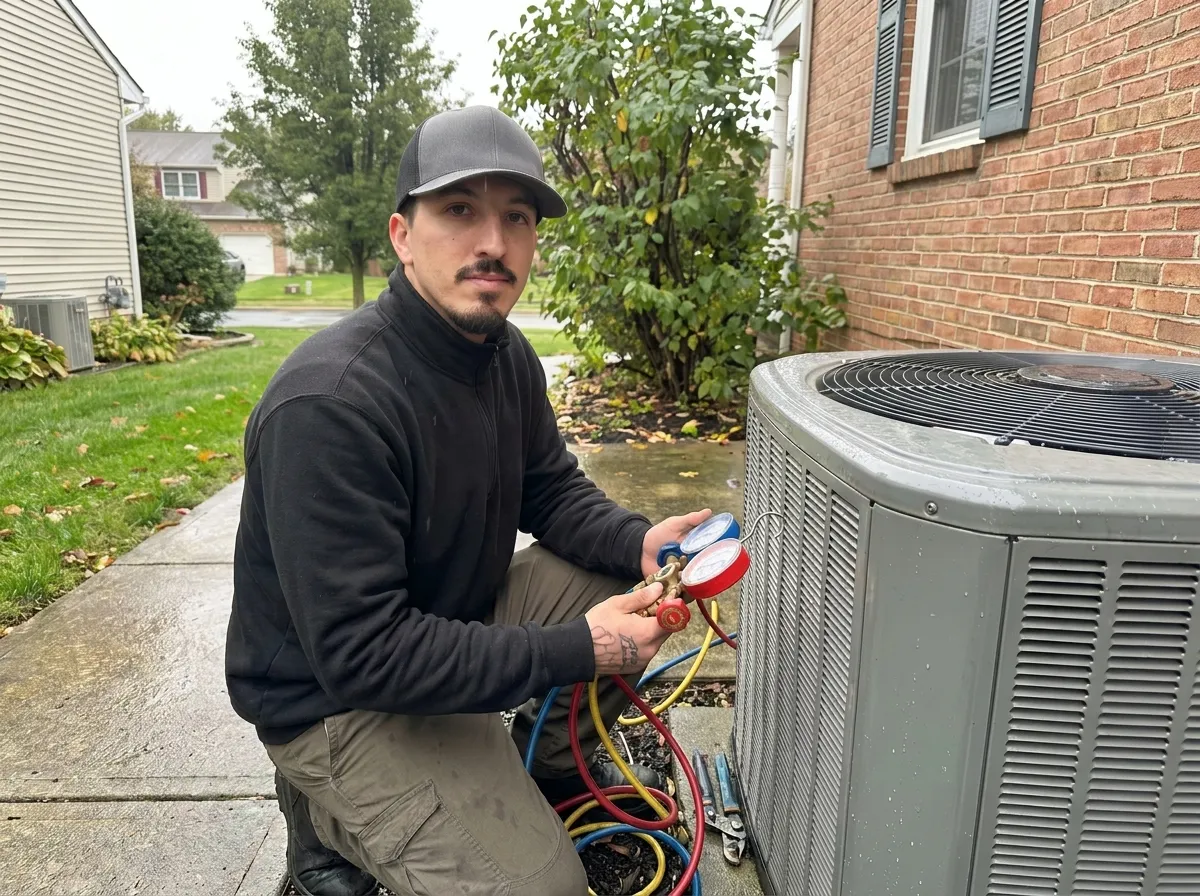 Cooling · Unionville, PA
Air Conditioning Services in Unionville, PA
Unionville summers run hot and sticky, and the pollen arrives before the heat does. Our cooling crew repairs every major brand, replaces systems sized to your actual house with a real load calculation, and keeps mini-splits humming in the area’s older, duct-free farmhouses.
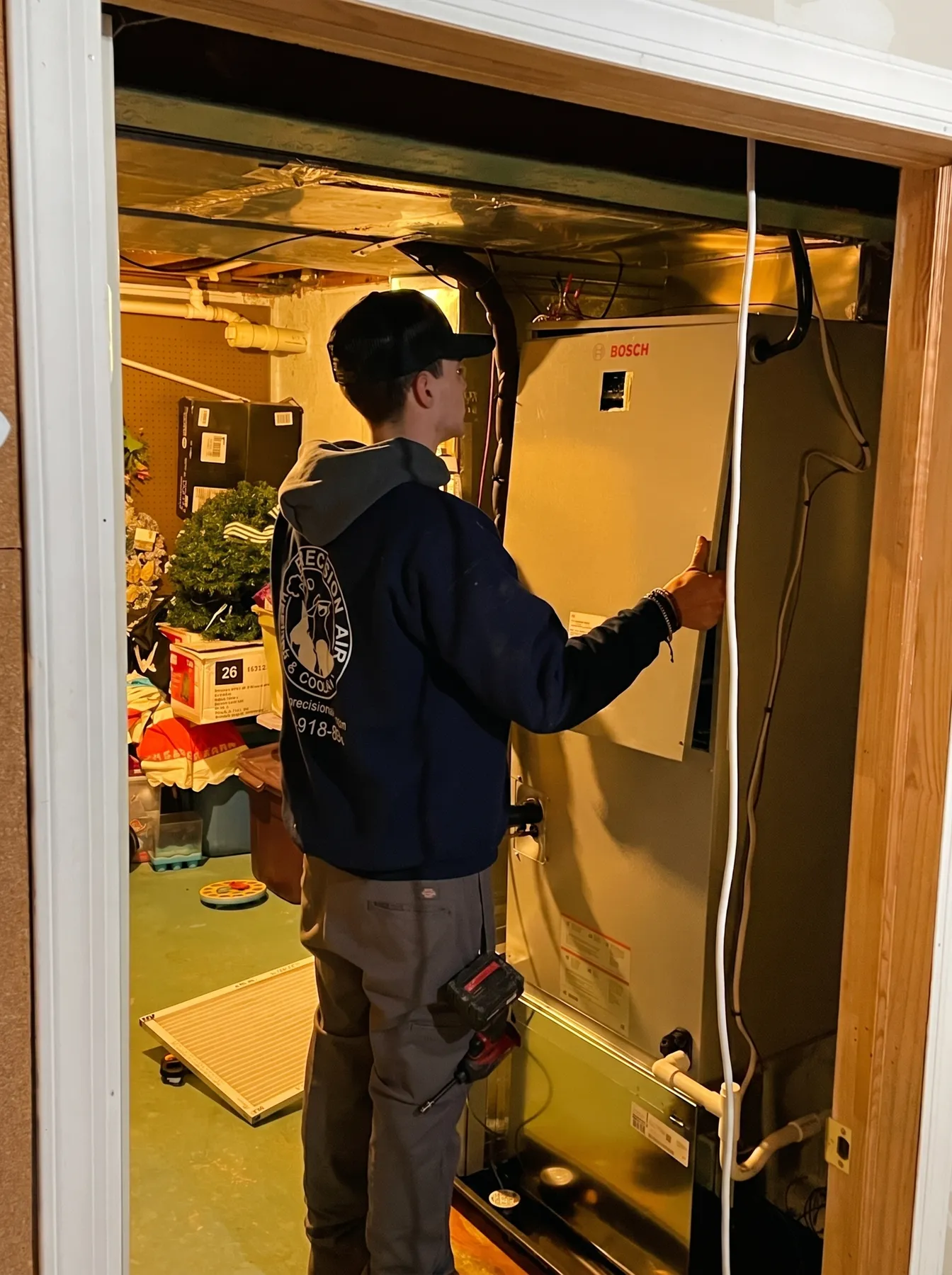 Heating · Unionville, PA
Heating Services in Unionville, PA
When a cold snap settles over Chester County, a tired furnace usually picks that week to quit. We repair all makes and models, install right-sized furnaces and cold-climate heat pumps, and handle the fall tune-ups that keep the heat coming on when you need it most.
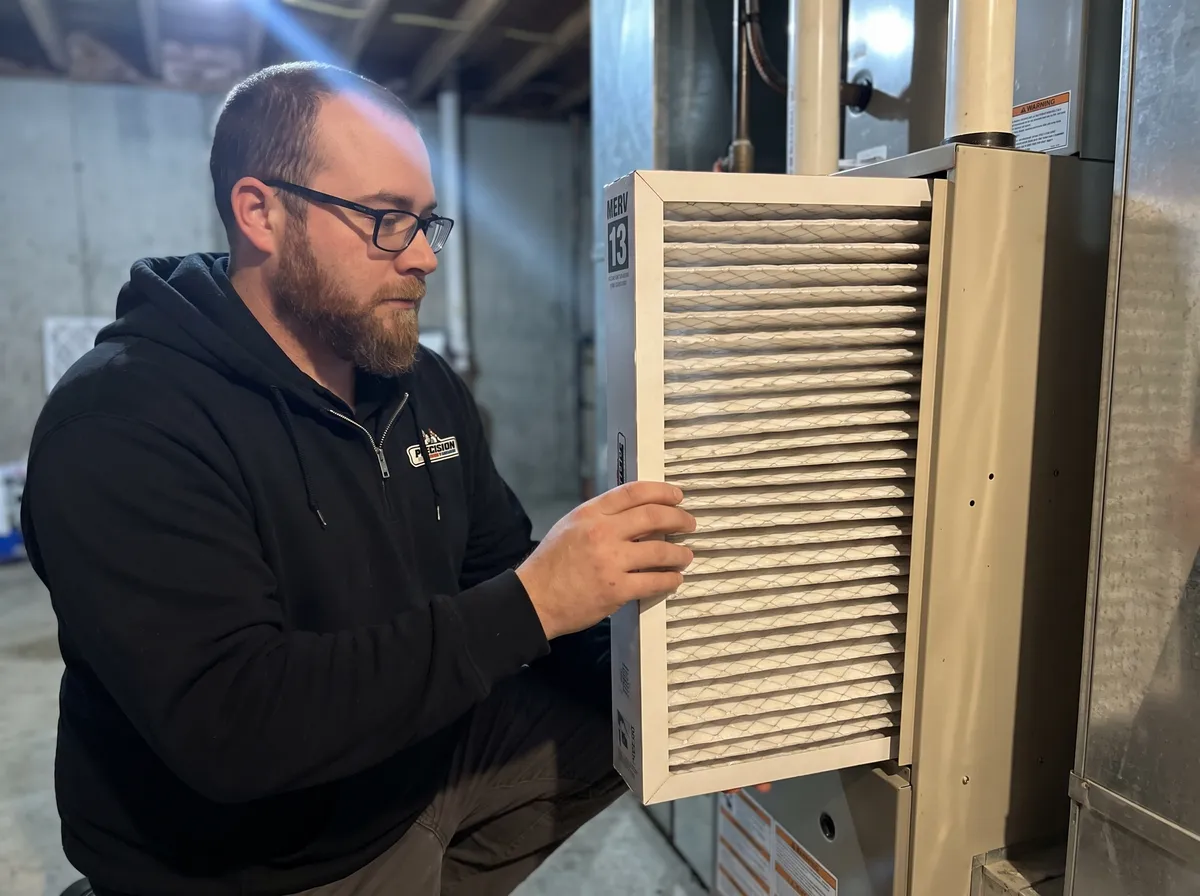 Air Quality · Unionville, PA
Indoor Air Quality Services in Unionville, PA
Between spring pollen off the open farmland, humid summers, and winters sealed up tight, Unionville air works hard. We clean and design ductwork, dial in filtration and humidity, and add UV protection where it earns its keep, so the air feels as good as the temperature.
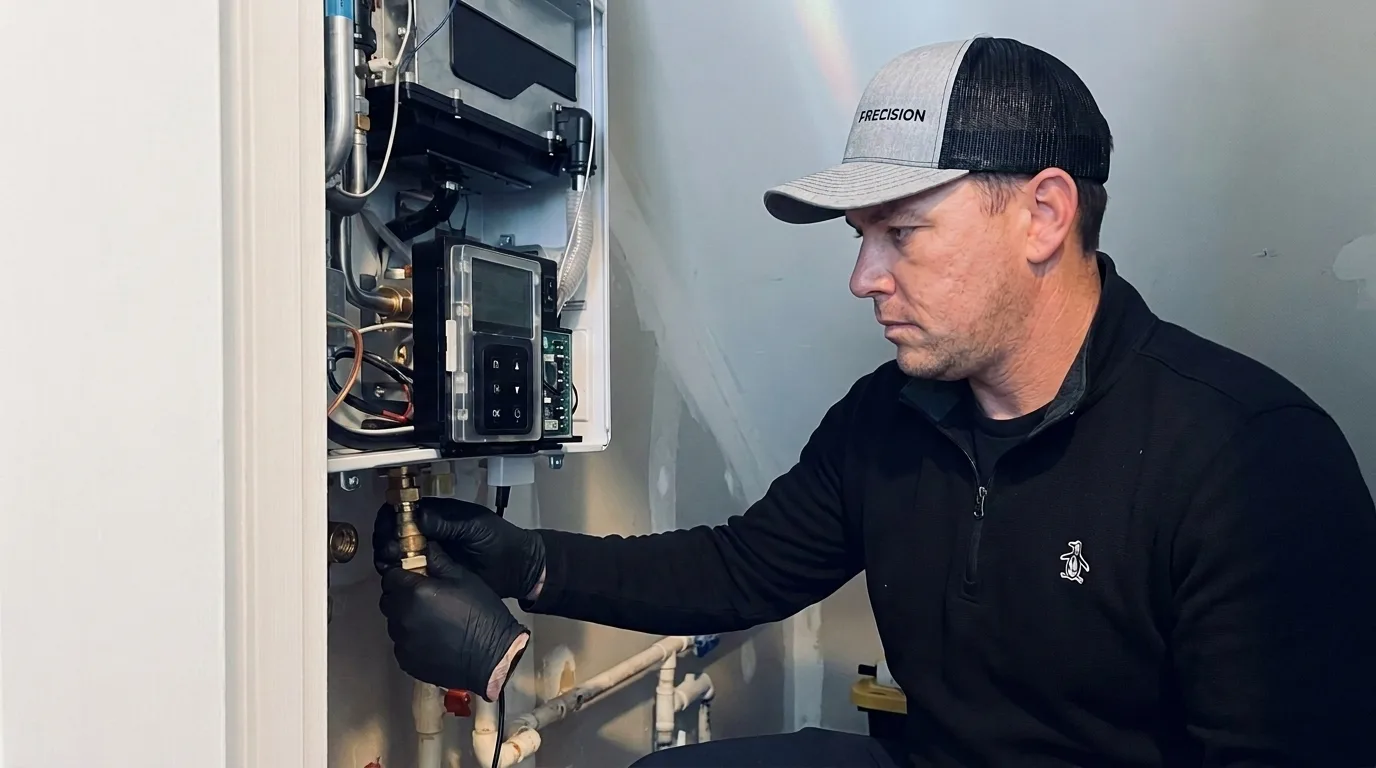 Water Heaters · Unionville, PA
Water Heater Services in Unionville, PA
Chester County’s hard water is rough on tanks, and nobody schedules a cold shower. We repair and maintain the water heater you have, replace it when the math says so, and install tankless systems that free up basement space and never run out mid-shampoo.
What Unionville Homeowners Should Know
Homes here run from 1800s village to farmhouses on big lots
The local knowledge that actually changes what we recommend for a home around Unionville.
Two hard seasons a year
Unionville summers sit in the humid 80s and 90s, and winters drop below freezing for weeks at a time. Equipment here works through a swing of roughly 100 degrees, which is why we recommend a spring AC tune-up and a fall heating check instead of waiting for the breakdown.
Village homes and country farmhouses
Unionville keeps much of its 19th-century village center, recognized as a historic district since 1979, and the countryside around it is old stone farmhouses on large lots. The oldest homes without ducts are strong candidates for ductless mini-splits, while larger properties often want real zoning to stay even.
Homes set far apart
Out past the village the land opens into horse farms and parcels where houses sit well back and far apart. That distance is exactly why a rushed contractor cuts corners on drive time. We build honest arrival windows for this part of the county and stock the trucks so most calls, from a furnace repair to a full install, finish in a single trip.
Toward Kennett Square
Unionville sits in East Marlborough Township, a few miles north of Kennett Square. We reach it off Route 82 and Route 162, about fifteen minutes west of our West Chester shop.
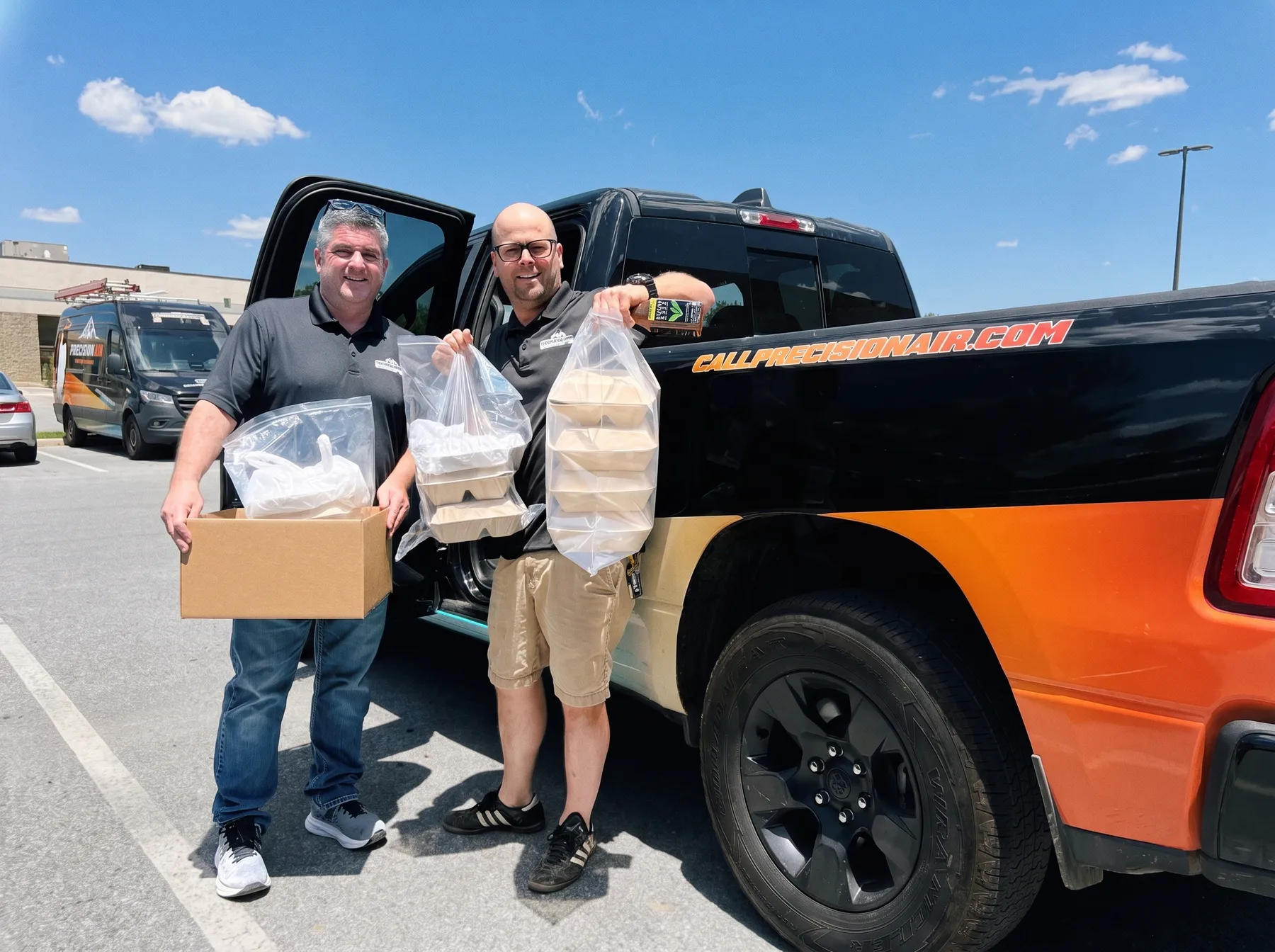 Unionville, PA
The same local crew, keeping Unionville, PA comfortable since 1993.
Why Choose Precision Air
Why Unionville Homeowners Choose Precision Air
Most of the big HVAC names in Chester County have been bought up by private equity. Precision Air is still owned by the same local family, and you can feel the difference in how the work gets done.
208 Carter Dr in West Chester is a real building with our vans out front, not a franchise call center. The people who answer the phone can see the schedule board and the parts shelf, so the answer you get is the real one.
On a younger system with one failed part, we tell you to fix it. You get a flat-rate price in writing before any work starts, and replacement only comes up when the math actually points that way.
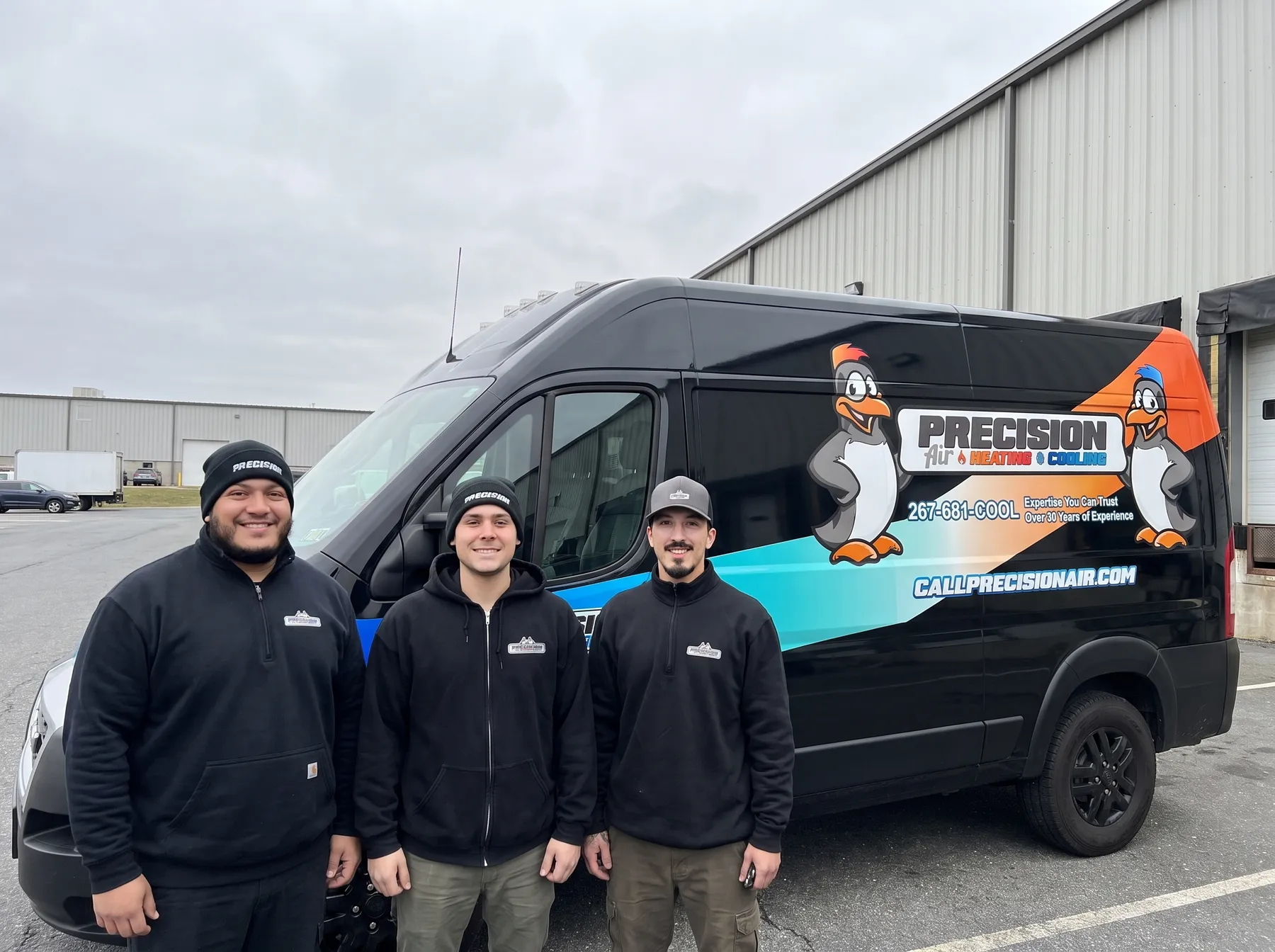
Request your free estimate
Tell us what’s going on. A real person follows up, usually the same business day.
* indicates required fields
Book HVAC Service in Unionville, PA
Talk to a local team that actually picks up
When something quits in your Unionville home, the last thing you need is a phone maze. Call Precision Air and you reach real people who can schedule you fast and tell you straight what is going on. Repairs book fast, and faster when you have no heat or cooling at all.
- Real people, fast callbacksSomeone here picks up during business hours and gets a technician moving. After hours, an answering service has your back and you get a callback in minutes, not a recording.
- Clear answers before any workYour technician finds the cause, shows you the proof, and prices the fix in writing before touching a thing. For a new system, a project manager measures your home and lays out options at a few budgets.

“When you call, you get a person who actually helps.”
Eric Light · Owner & President
Comfort in 4 Simple Steps
From first call to fixed, here is how it goes
What working with a local, independent crew actually looks like, from your first call to a finished job.
You call, and someone here picks up.
No phone maze. Press 1 and the whole team rings at once. We get the gist, then book you in quickly, and faster when you’ve got no heat or cooling at all.
We diagnose and show you.
Your technician finds the root cause, then shows you the gauge reading, the leaking coil, or the worn part in your hands. You never just take our word for it.
You approve the price.
You get a flat-rate estimate in writing, with your options laid out plainly. Nothing is left open-ended. Work starts only when you say go.
We fix it, and stand behind it.
Most repairs finish the same visit, most installs in a day. We haul away the old equipment and every last screw. If we touched it, it’s ours to make right.
Rated 4.9 Stars by 850+ Homeowners Across Southeastern PA
Why homes like yours stick with us.
Real, verified Google reviews from homeowners across Chester County.
My sixth visit from Precision over the last few years, and every experience has been fabulous. They beat all the other quotes I received and gave me superior equipment.
We woke up to a cold house with no heat. I called first thing in the morning and John came out the same day, honest and knowledgeable, and never tried to upsell us.
I’ve been using Precision for over 5 years. Every technician is polite and explains everything in a way I understand. They schedule me immediately and treat me like family.
Lucas from Precision Air Heating and Cooling came out today to tune up our furnace. He did a really thorough job, checked everything carefully, answered all my questions, and gave some great tips on keeping it running well.
I’ve used Precision Air multiple times now for service on our York system. They’re a very professional group, from the office to the on-site service folks. Had a leaking coil in the outside unit. Sonny came out to diagnose and quickly found the problem.
HVAC Service in the Towns Around Unionville
One crew for Unionville and every town around it
The same technicians who cover Unionville serve the whole ring of towns around it, so if you are just outside the village, you are still on our map. Pick your town.
Don’t see your town? See every area we serve or give us a call. Chances are our penguins patrol it too.

Unionville HVAC FAQs
Your questions, answered straight.
Answer-first replies to what Unionville homeowners ask us most.
Still have a question? Call usDo you have HVAC technicians near Unionville, PA?
How fast can you get to a Unionville home with no heat or no AC?
Can you reach the farms and homes set back off the road around Unionville?
Can you work on the old stone farmhouses near Unionville?
What does HVAC maintenance cost in Unionville?
Do you serve the Kennett Square side of the Unionville area too?


Ready When You Are
Comfortable in Unionville, Done Right.
Tell us what your system is doing and we’ll give you a clear, upfront estimate and a time that works, usually within days. One local crew for the whole house.
Family-owned in West Chester since 1993 · ★ 4.9 from 850+ Google reviews